


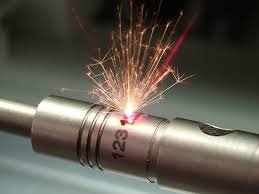
3D Laser Engraving – Precision Meets Depth and Dimension
3D Laser Engraving – Informative Overview
| Feature / Parameter | Description |
|---|---|
| Process Name | 3D Laser Engraving |
| Technology Type | Advanced Laser Material Processing |
| Working Principle | High-intensity laser beams remove material layer by layer, guided by a 3D digital model to create depth and dimensional patterns. |
| Key Capability | Engraves complex 3D designs, logos, textures, and micro-patterns with variable depths on flat or curved surfaces. |
| Material Compatibility | Metals (Steel, Aluminum, Copper, Brass), Plastics, Ceramics, Glass, Wood, and Composite Materials. |
| Precision Level | Up to ±0.001 mm depending on laser system and material type. |
| Surface Finish Quality | Smooth, detailed, and high-resolution finish with minimal post-processing required. |
| Advantages | Non-contact process, no tool wear, high repeatability, customizable depth control, and eco-friendly operation (no chemicals). |
| Applications | Automotive parts, molds & dies, jewelry design, aerospace components, signage, consumer electronics, and decorative products. |
| Software Integration | Compatible with CAD/CAM and 3D modeling software for accurate design-to-production workflow. |
| Production Benefits | Reduced processing time, consistent results, high aesthetic appeal, and cost efficiency for both small and large batch production. |
3D Laser Engraving
is an advanced laser processing technology that creates deep, detailed, and three-dimensional designs on various materials with exceptional precision and clarity. Unlike traditional engraving methods that remove material layer by layer in a flat plane, 3D laser engraving uses high-powered laser beams to sculpt the surface with controlled depth variations—bringing designs, logos, and textures to life with remarkable realism.
The process involves digitally controlled laser pulses that vaporize material in specific layers, guided by a 3D model or vector design. This allows for the reproduction of intricate details, varying depths, and smooth contours across complex geometries. 3D laser engraving is compatible with a wide range of materials such as metals, plastics, ceramics, glass, wood, and molds—making it suitable for diverse industries including automotive, aerospace, jewelry, tooling, and consumer products.
In tooling and mold making,
3D laser engraving enables the creation of fine textures and micro-patterns directly onto curved or uneven surfaces, eliminating the need for manual finishing or chemical etching. It provides consistent, repeatable, and high-resolution results while reducing production time and improving product aesthetics and functionality.
The non-contact nature of the process ensures zero tool wear, no deformation, and minimal heat-affected zones, resulting in superior quality and long-lasting precision.
3D Laser Engraving
In essence, is the future of modern surface personalization—combining accuracy, efficiency, and creative freedom to transform ordinary surfaces into extraordinary works of art or functional engineering masterpieces.
