

5 Axis Laser Technology: Precision Without Limits in Modern Manufacturing
Table of Contents
Modern manufacturing is changing faster than ever before. Product designs are becoming more complex, surface quality expectations are increasing, and production timelines are getting shorter. In such an environment, traditional machining and surface treatment methods often struggle to meet both accuracy and consistency at the same time.
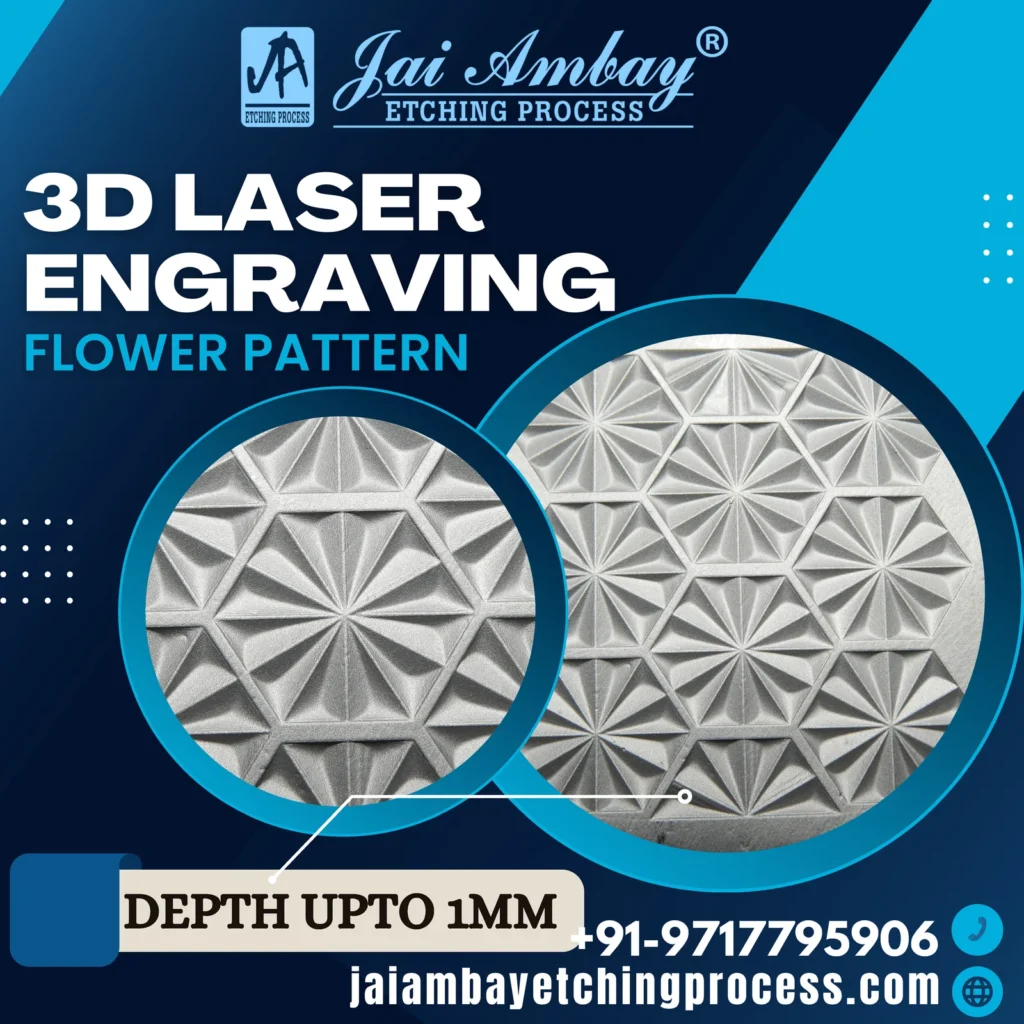
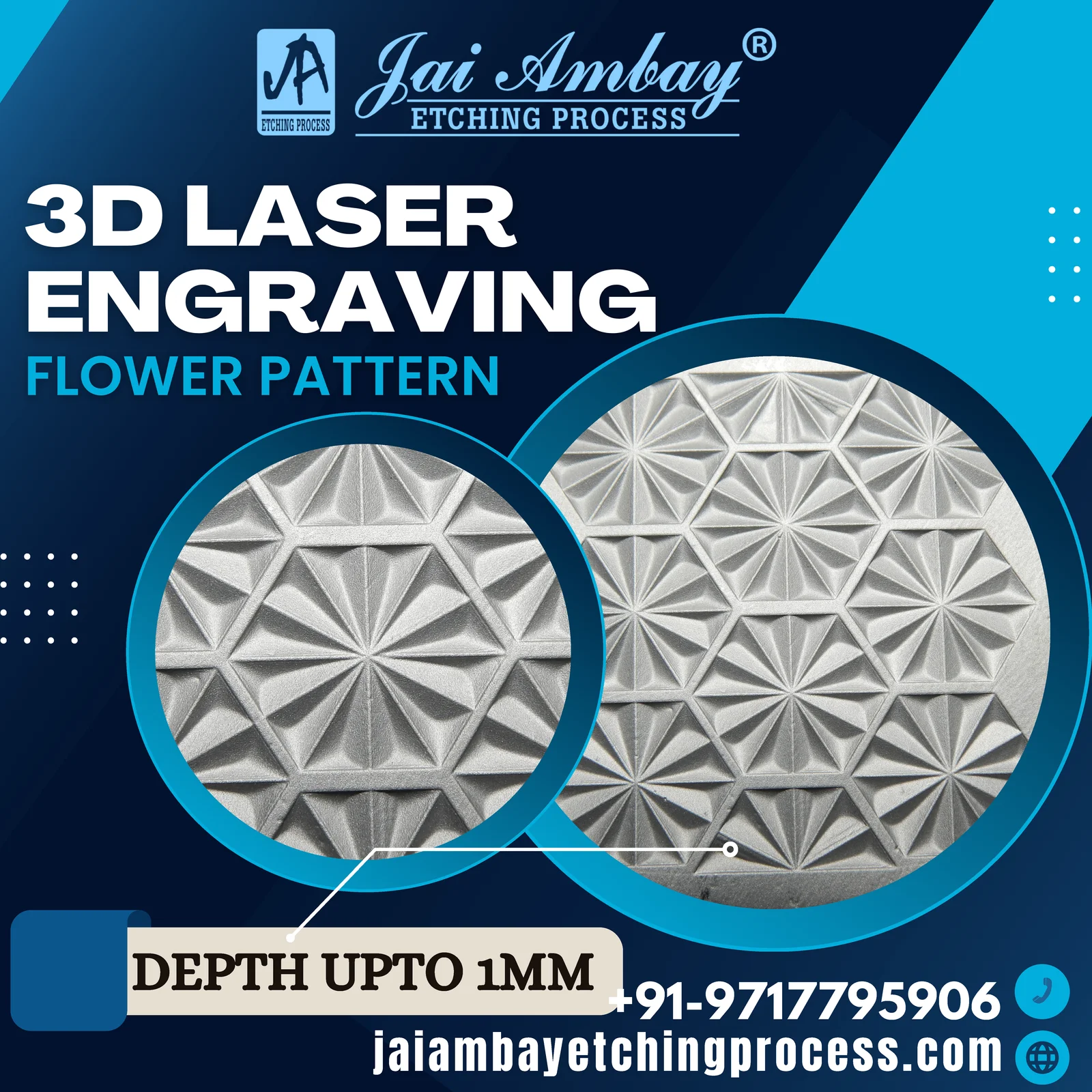
This is where 5 axis laser technology has created a major shift in the way components and mould surfaces are processed.
Unlike conventional systems that work mainly on flat or limited areas, a 5 axis laser machine can handle angled, curved, and three-dimensional surfaces with much better control. For industries that depend on precision — especially mould manufacturing — this technology has become an essential part of modern production.
Jai Ambay Etching Process, we have been involved in surface engineering work since 1996. Over the years, we have seen how surface quality directly affects mould performance during real production. With the introduction of 5 axis laser texturing technology, it has become possible to achieve uniform textures even on complex mould cavities where older methods often fail.
Understanding What 5 Axis Laser Technology Means
In simple language, a 5 axis laser system can move in five directions at the same time. Along with the standard X, Y, and Z linear movements, two additional rotary axes allow the laser head to rotate and maintain the correct angle on the surface.
This may sound like a small change, but in practical work it makes a very big difference.
When a laser beam hits the surface at the wrong angle, texture depth becomes uneven. On curved mould surfaces, this problem is very common with 2D or 3 axis systems. With 5 axis movement, the laser remains properly aligned with the surface throughout the process, resulting in consistent depth and cleaner texture patterns.
From a shop-floor point of view, this means fewer corrections, less rework, and better repeatability during actual mould trials.
Why Traditional Methods Often Fall Short
Traditional machining and surface treatment processes work well for simple shapes. However, as soon as mould geometry becomes complex, several limitations appear.
Multiple setups are required. Manual repositioning increases error risk. Texture alignment becomes difficult. Depth variation becomes visible after mould trials.
In many cases, even small inconsistencies on the mould surface can lead to flow marks, uneven gloss, or poor release during injection moulding.
This is exactly where 5 axis laser technology proves its value. By allowing full freedom of movement, it removes the dependency on repeated manual adjustments and delivers a controlled process from start to finish.
Role of 5 Axis Laser Technology in Surface Texturing
Laser texturing is a non-contact surface modification process where a focused laser beam alters the surface at a microscopic level. Unlike chemical etching, there are no acids, no masking layers, and no material handling risks.
When laser texturing is combined with 5 axis movement, the results become far more consistent.
The system can apply textures evenly across curved cavities, deep ribs, and three-dimensional mould profiles. Pattern continuity remains intact, and texture depth stays uniform throughout the surface.
In real mould applications, this uniformity plays a critical role in both appearance and functionality of the final plastic component.
Practical Benefits Seen in Mould Manufacturing
From daily mould texturing experience, several practical benefits become clear when using 5 axis laser technology.
First, texture depth remains consistent even in deep cavity areas. Second, pattern alignment looks natural and continuous. Third, repeatability from one mould insert to another becomes much easier to control.
These factors directly influence mould performance during injection cycles.
Manufacturers often notice improvements in:
- Material flow behaviour
- Part release consistency
- Surface appearance
- Reduction in mould polishing adjustments
Over time, this leads to improved mould life and reduced production downtime.
Applications Across Multiple Industries
Although mould texturing remains one of the most important applications, 5 axis laser technology is widely used across several industries.
Automotive Industry
Interior panels, trims, knobs, and visible plastic parts require uniform surface finish. Multi-axis laser texturing helps achieve consistent appearance across all production batches.
Consumer Products
Appliance housings, electronic enclosures, and decorative plastic components benefit from controlled surface textures that improve both grip and aesthetics.
Tool and Die Manufacturing
Textured mould surfaces help improve release characteristics and maintain stable production quality.
Medical and Precision Components
Where accuracy and cleanliness are critical, laser processing offers controlled surface modification without physical contact.
Material Compatibility and Processing Control
One of the strengths of 5 axis laser systems is their flexibility with materials. Tool steel, hardened inserts, stainless steel, aluminium, and special alloys can all be processed with proper parameter control.
Because the laser works without physical contact, there is no tool wear. Heat input can be carefully controlled to avoid distortion, especially in hardened mould components.
This level of control allows manufacturers to achieve predictable results even on sensitive or high-value parts.
Efficiency Advantages in Real Production
In conventional processes, multiple setups consume time and increase handling risk. With 5 axis laser systems, many operations can be completed in a single setup.
This results in:
- Shorter processing time
- Reduced handling errors
- Improved workflow efficiency
- Stable quality output
For mould makers working on tight delivery schedules, these advantages become extremely important.
Long-Term Value of 5 Axis Laser Technology
Although 5 axis laser systems involve higher initial investment, their long-term value becomes clear with continuous use.
Reduced rework, consistent surface quality, and reliable repeatability help lower overall manufacturing cost over time. More importantly, stable quality builds confidence between mould maker and end customer.
From a business point of view, this technology supports long-term growth rather than short-term savings.
Future Direction of Laser Texturing
As manufacturing technology continues to evolve, laser systems are becoming smarter. Advanced software integration, improved motion control, and better monitoring systems are increasing accuracy further.
Laser texturing is also moving towards functional surfaces — textures designed not only for appearance but also for improved flow, reduced friction, and better product performance.
This makes surface engineering an increasingly important part of product design itself.
Why Manufacturers Trust Jai Ambay Etching Process
Jai Ambay Etching Process, surface engineering is not just a service — it is a long-term practice built through years of real work.
✔ Serving the industry since 1996
✔ Strong focus on mould texturing applications
✔ Practical understanding of mould behaviour
✔ Advanced 5 axis laser texturing capability
✔ Reliable and repeatable quality standards
Our approach combines traditional surface finishing knowledge with modern laser technology, ensuring textures that perform effectively during real production, not just on drawings.
Conclusion
5 axis laser technology has redefined the way complex surfaces are processed. Its ability to deliver consistent results on three-dimensional geometries makes it an essential tool for modern manufacturing.
For mould makers and manufacturers who demand accuracy, reliability, and long-term consistency, this technology provides a clear advantage.
Jai Ambay Etching Process, we continue to apply our experience and technical understanding to deliver surface textures that support quality production and long-term performance.
Frequently Asked Questions
What is 5 axis laser technology?
5 axis laser technology allows the laser to move in five directions, helping it work accurately on curved and complex surfaces.
Why is 5 axis laser better for mould texturing?
It keeps the laser at the correct angle, giving even texture depth and smooth patterns on all surfaces.
How is it different from traditional etching?
It is a clean, non-contact process with no chemicals, less rework, and more consistent results.
Can it texture complex mould shapes?
Yes, it works perfectly on deep cavities, curves, and angled mould surfaces.
What industries use 5 axis laser technology?
It is commonly used in automotive, consumer products, tool and die, and medical industries.
What materials can be processed?
Tool steel, hardened steel, stainless steel, aluminium, and special alloys.
Does it improve mould performance?
Yes, it improves material flow, part release, and surface appearance.
Does it save production time?
Yes, it reduces multiple setups and speeds up the texturing process.
Why choose Jai Ambay Etching Process?
With experience since 1996, they deliver reliable, high-quality 5 axis laser texturing for real production needs.