



5 Axis Laser Texturing for Moulds – A Practical Solution for Common Mould Problems
Table of Contents
In many factories & companies, one common problem is seen again and again.
During the mould trial, the part does not release properly.
Some areas look dull. Some areas look glossy. Sometimes texture looks good in one cavity but different in another.
Because of these problems, production stops. Rework starts.Time and money both get wasted.
Most of these issues happen because the mould surface texture is not uniform.
This is where 5 Axis Laser Texturing becomes a practical and reliable solution.
Common Problems Faced by Mould Buyers
Many mould buyers face these problems:
- Texture shade difference after mould trial
- Poor release of plastic parts
- Visible flow marks on finished product
- Texture mismatch on curved surfaces
- Rework after polishing
- Chemical etching not giving repeat result
These problems are very common, especially in complex moulds.
Why Traditional Methods Fail on Complex Moulds
In chemical etching or manual texturing, the surface is treated from one direction.
When mould shape is flat, the result is acceptable.
But when mould has curves, ribs, or deep cavities, problems start.
The texture depth becomes uneven.
This causes:
- Different shade on parts mjn
- Poor plastic flow
- Rejection during production
That is why many mould buyers look for a better method.
What Is 5 Axis Laser Texturing? (Simple Explanation)
5 Axis Laser Texturing means the laser head can move in many directions at the same time.
The laser always stays at the correct angle on the mould surface.
Because of this:
- Texture depth remains same everywhere
- Curved areas get equal treatment
- No manual adjustment is required
The result is a clean, uniform and repeatable texture.
How 5 Axis Laser Texturing Solves Real Mould Problems
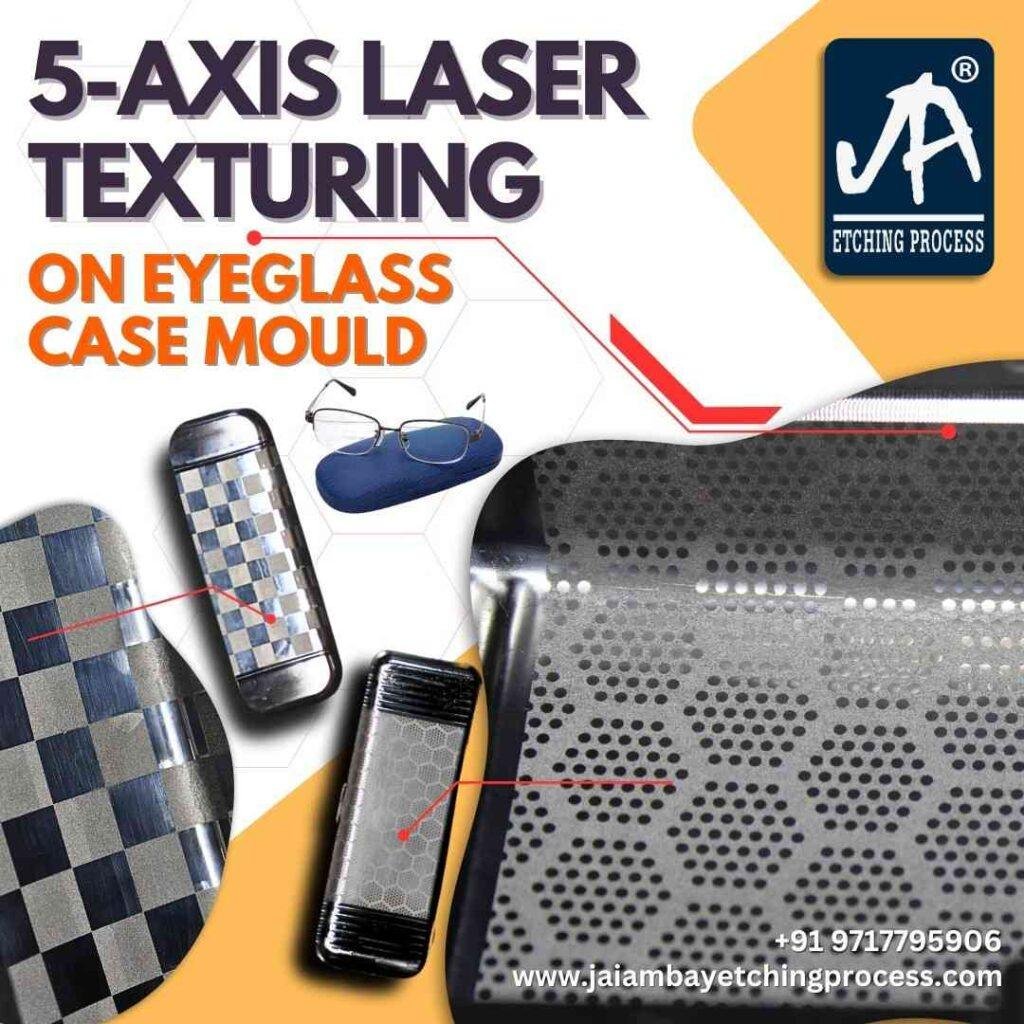
Let us understand in simple way.
Problem: Uneven texture after mould trial
Solution:
Laser maintains equal depth on all surfaces.
Problem: Shade difference on plastic part
Solution:
Uniform texture gives uniform part appearance.
Problem: Poor release
Solution:
Controlled micro texture improves part release.
Problem: Rework after polishing
Solution:
Laser texturing reduces polishing correction.
This is why many mould makers now prefer laser texturing over chemical methods.
Where 5 Axis Laser Texturing Is Mostly Used
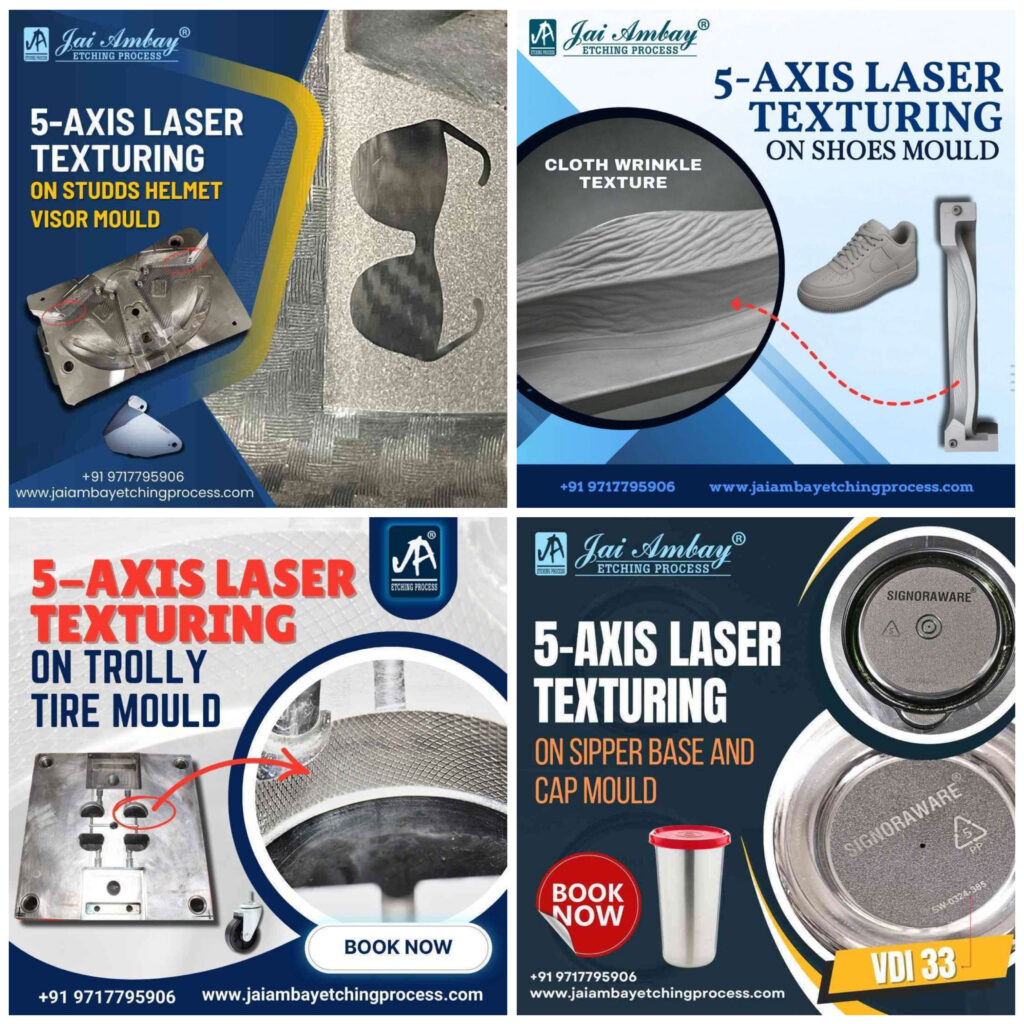
5 Axis Laser Texturing is commonly used for:
- Plastic injection moulds (Mobile phone covers ,electronic housings, Bottle caps and closures)
- Automotive Safety Equipment industry. (Helmet visors, motorcycle helmets, and protective visor components)
- Consumer Electronics Moulds. (Mobile phones, mobile chargers & earphones)
- Consumer Products (Sipper caps and bottle bases)
Especially where appearance and repeat quality matter.
Why Mould Buyers Prefer Laser Texturing
Mould buyers usually want three things:
- Stable production
- Good appearance
- No repeated correction
Laser texturing helps achieve all three.
Once the texture is programmed, the same pattern can be repeated again without variation.
This helps mould buyers save time and avoid repeated trial problems.
Our Practical Experience Since 1996
Jai Ambay Etching Process, have been working in surface texturing since 1996.
Over the years, we have handled many types of moulds:
- Automotive parts
- Household product moulds
- Electrical and electronic moulds
- High-appearance plastic parts
From this experience, we clearly understand one thing:
A good texture is not only about design.
It must work properly during production.
That is why we focus on texture depth, surface behavior, and mould performance — not only visual look.
Why 5 Axis Laser Texturing Gives Better Results
- No chemical handling
- No masking required
- No tool wear
- High repeat accuracy
- Clean and controlled process
Most importantly, the result remains stable even after long production runs.
When Should You Choose Laser Texturing?
You should consider 5 Axis Laser Texturing when:
- Your mould has curved or 3D surface
- Chemical etching gives uneven result
- You want same texture on multiple cavities
- Export quality finish is required
- Appearance of plastic part is critical
Why Choose Jai Ambay Etching Process for 5 Axis Laser Texturing
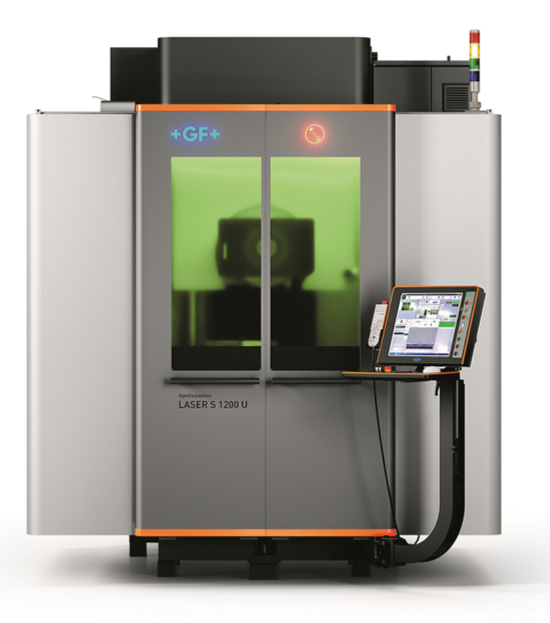
5 Axis Laser Texturing is a highly precise process. It requires advanced technology, accurate control of laser angle, and deep understanding of mould surface behavior.
Jai Ambay Etching Process, we focus specifically on solving real production problems using advanced 5 Axis Laser Texturing technology.
What makes us different:
- Surface engineering experience since 1996
- Advanced GF Laser S 1200 U – 5 Axis Laser Texturing System
- Jai Ambay Etching Process is the only company in India equipped with the GF Laser S 1200 U machine
- Ability to perform true multi-axis laser texturing on complex mould surfaces
- Advanced 3D profile texture scanning system for texture replication and analysis
- Surface texture depth and roughness measurement instruments for quality verification
- Skilled technical team with practical mould experience
- Production-oriented approach focused on mould performance
Our GF Laser S 1200 U machine allows the laser head to maintain the correct angle across complex 3D mould surfaces. This ensures uniform texture depth even on curved areas, ribs, and deep cavities.
Our Advanced 3D texture profile scanning, can study existing textures and reproduce them accurately when required.
Our surface measurement instruments help verify texture depth and ensure consistency before the mould goes into production.
We work closely with mould makers to ensure the laser texture performs correctly during actual mould trials and production runs.
How We Work
- Understand mould application
- Study surface area and geometry
- Select suitable texture pattern
- Apply controlled laser texturing
- Support during mould trial if required
Our goal is simple: Your mould should run smoothly in production.
Conclusion
Many mould problems do not come from mould design. They come from surface texture.
If your mould is facing shade difference, release issues, or repeat correction, the solution may not be polishing again — the solution may be correct laser texturing.
5 Axis Laser Texturing gives control, consistency, and confidence.
Frequently Asked Questions
Q1. What is 5 Axis Laser Texturing?
5 Axis Laser Texturing is a method where a laser makes texture on the mould surface from all angles. This gives equal texture depth even on curved and 3D surfaces.
Q2. Why is laser texturing better than chemical etching?
Chemical etching may give uneven depth on curved areas.
Laser texturing gives controlled and repeatable results without chemicals.
Q3. Can laser texturing solve shade difference problem?
Yes. In most cases, shade difference happens due to uneven texture depth. Laser texturing helps maintain uniform surface finish.
Q4. Is laser texturing safe for hardened moulds?
Yes. Laser texturing is a non-contact process and is suitable for hardened mould inserts when done with proper parameters.
Q5. Can the same texture be repeated on another mould?
Yes. Once the texture program is saved, the same pattern can be repeated with very good accuracy.
Q6. Which moulds are suitable for laser texturing?
Laser texturing is suitable for:
- Plastic injection moulds
- Automotive moulds
- Appliance moulds
- Electronic and consumer product moulds
Q7. Will laser texturing improve mould release?
In many cases, yes. Proper micro-texture helps plastic parts release smoothly and reduces sticking issues.
Q8. Do I need to polish the mould again after texturing?
Usually no. Laser texturing reduces re-polishing work if surface preparation is done correctly.
Q9. How long does laser texturing take?
Time depends on mould size, area, and texture design. After checking the mould, exact time can be confirmed.
Q10. How can I know which texture is right for my mould?
You can contact our technical team. We review mould application and suggest suitable texture based on real production use.
