


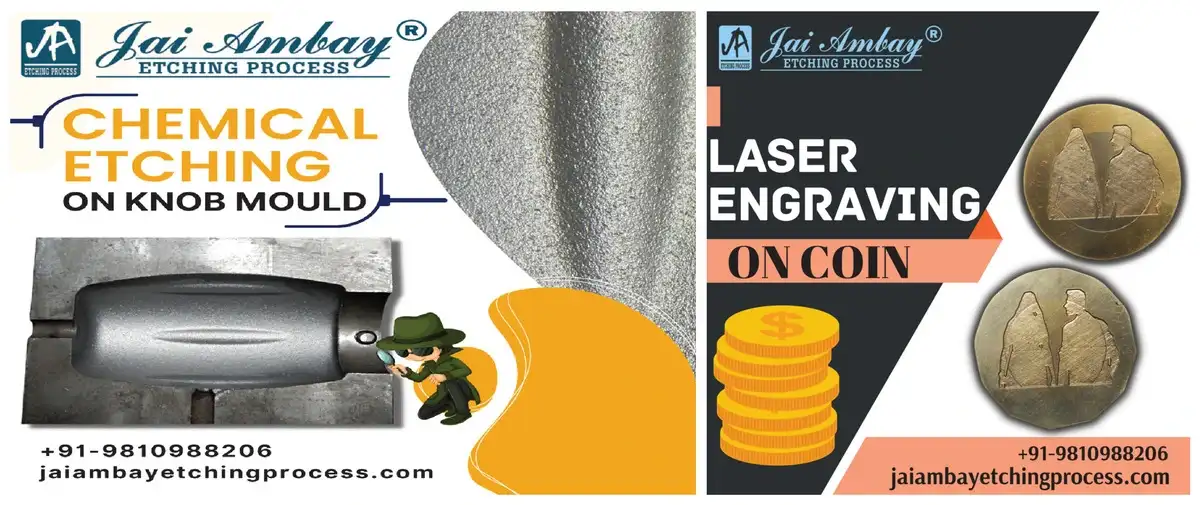
Chemical Etching vs Laser Engraving – Which Method is Best for Mould Textures?
Creating the right surface texture on moulds is very important in manufacturing.The texture on a mould has a significant impact on the overall look as well as function of a product. For example, plastic items, automotive parts, consumer products, as well as electronic items, may need specific textures to ensure grip, look, or brand identification.
The two common techniques that are used to create textures on moulds include chemical etching as well as laser engraving. These techniques assist companies in creating textures on moulds, but they function in different ways.
The difference between chemical etching vs laser engraving is essential to assist various businesses in selecting the most appropriate technique to create textures on moulds. In this post, we will discuss how both techniques function, their benefits, as well as when to use each technique.
What Is Chemical Etching?
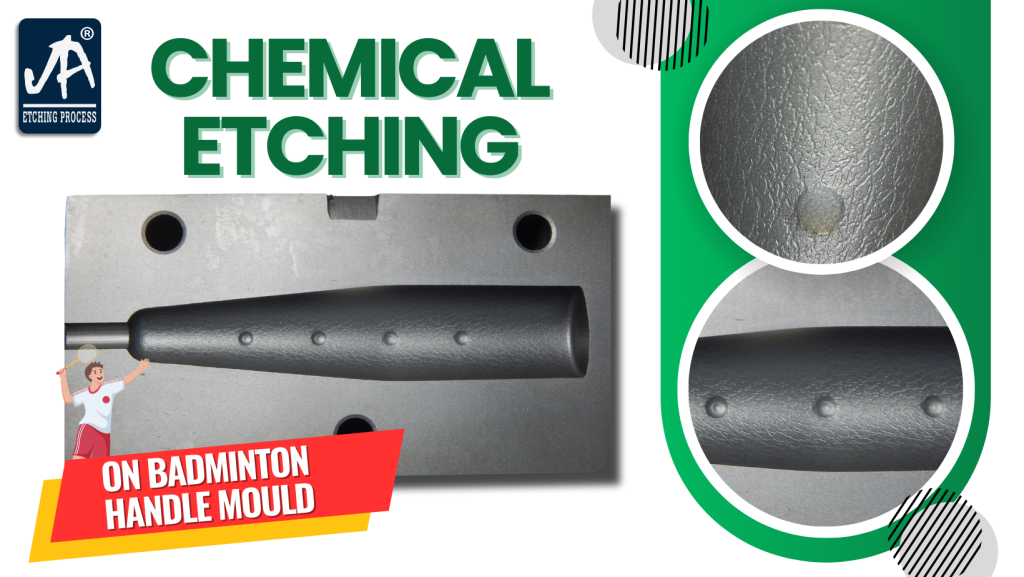
Chemical etching is a technique that is used to eliminate a certain amount of material from the surface of the metal by utilizing a controlled chemical reaction. In this technique, special chemicals are used that are applied to the surface of the metal, creating the design, texture, or pattern.
The portions of the metal that need to be left untouched are covered with a mask, allowing the chemicals to act on the exposed portions, which then react with the solution, causing the metal to get removed, creating the texture.
This technique is commonly used for the chemical etching of metal surfaces, especially in the manufacturing of moulds, as they require texture.
How Chemical Etching Works
The steps in the process are as follows:
- The surface of the metal is cleaned.
- A mask is applied.
- The chemicals are used.
- The mask is removed.
- The mould surface is cleaned.
Because the reaction removes metal slowly and evenly, chemical etching can create smooth and consistent textures on mould surfaces.
Types of Chemical Etching Processes
There are various types of chemical etching processes used in different industries.
Photochemical Etching
Photochemical etching is done with the help of light, photoresist, etc. Here, the photoresist is applied over the metal surface, and the surface is exposed to UV light through a film.
The exposed surface is then sensitive to chemicals, allowing the photoresist to be removed.
This method is known for creating detailed textures.
Electrical Chemical Etching
Another technique is electrical chemical etching, which makes use of an electric current.
This technique is effective in controlling the depth of the etching as well as the creation of the design on the metal surface.
What Is Laser Engraving?
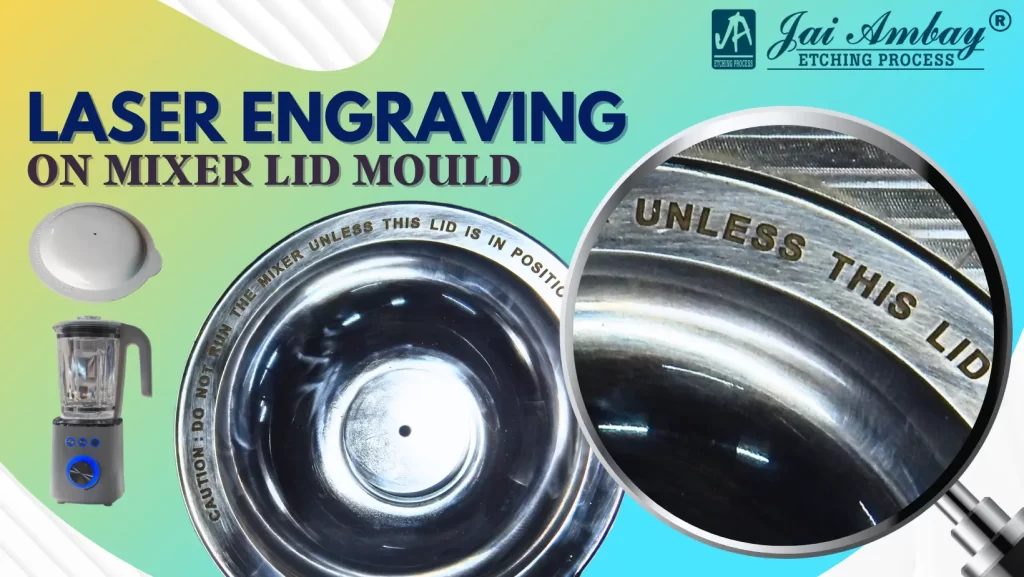
Laser engraving is a modern technique that uses a focused laser beam to remove material from the surface of a mould.
The laser burns or vaporizes small quantities of metal, thereby creating patterns, textures, or markings.
Laser engraving is different from chemical etching because it is a “dry” and “highly controlled digital process.”
Manufacturers prefer this technique when they want precision, intricate designs, or quick turnaround.
There are already several companies that offer laser engraving service on metals to assist industries in creating intricate textures on mold surfaces.
How Laser Engraving Works
Laser engraving machine operating by a computer to control and guide the laser beam on the metal surface.
The basic steps in laser engraving include:
- Creating a computer design or texture pattern
- Transferring the computer pattern to the laser engraving machine
- The laser beam removes metal layers
- Cleaning the surface
Because the process is controlled digitally, laser engraving allows very accurate and repeatable results.
Chemical Etching vs Laser Engraving
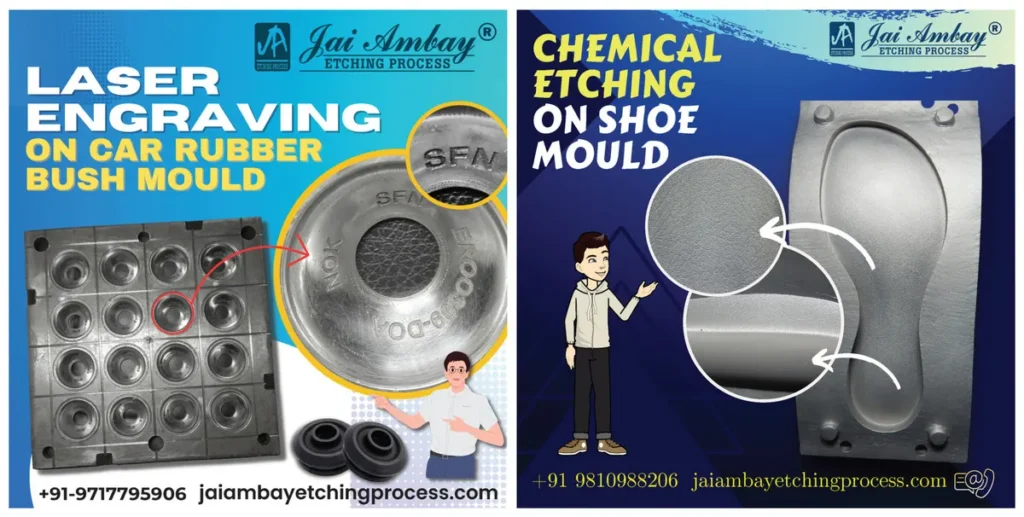
However, both methods can achieve mould textures. The advantages of each technique differ. The key differences between chemical etching and laser engraving.
1. Process Method
| Chemical etching | Chemical etching involves chemical reactions to remove metal from the mould surface. Laser engraving |
| Laser engraving | Laser engraving involves the removal of material from the mould surface by a focused laser beam. |
2. Surface Finish
| Chemical etching | Chemical etching of metal surfaces tends to result in smooth and natural surface textures. |
| Laser engraving | Laser engraving can also be used for detailed textures, but it might require further finishing depending on the application. |
3. Production Speed
| Laser engraving | This method requires several steps, which might take longer. |
| Chemical etching | This method tends to be faster since it can be directly programmed. |
4. Environmental Impact
| Chemical etching | Chemical etching uses chemical solutions that require proper handling and disposal. |
| Laser engraving | Laser engraving is a cleaner process because it does not require chemical reactions. |
Conclusion
Both chemical etching and laser engraving are powerful methods for creating mould textures. Each method has its own advantages depending on the application and design requirements.
Traditional chemical etching metal processes are known for producing smooth and uniform textures, while modern laser engraving for mould texturing offers high precision and flexibility.
With technologies like industrial laser engraving service and 5 axis laser engraving service, manufacturers can now create complex textures on mould surfaces more efficiently.
Businesses that need mould texturing should carefully evaluate their requirements before choosing between chemical etching vs laser engraving.
Working with experienced service providers ensures the mould texture is accurate, durable, and suitable for the final product design.
Frequently Asked Questions (FAQs)
What is chemical etching in mould texturing?
Chemical etching is a process that uses chemicals to remove small amounts of metal from a mould surface. This method creates patterns or textures that help improve the appearance and grip of the final product.
What is laser engraving for mould texturing?
Laser engraving for mould texturing uses a focused laser beam to remove material from the mould surface. The laser creates precise patterns and textures based on digital designs.
What is the difference between chemical etching and laser engraving?
The main difference is the process used. Chemical etching uses chemicals to remove metal, while laser engraving uses a laser beam to engrave patterns directly on the mould surface.
What is photochemical etching?
Photochemical etching is a type of chemical etching that uses light and photoresist materials to transfer patterns onto metal surfaces before the chemical process removes the exposed metal.
What is electrical chemical etching?
Electrical chemical etching combines electrical current with chemical reactions to control the etching process. It is often used for detailed markings and precision surface textures.
When should manufacturers choose laser engraving for mould texturing?
Manufacturers often choose laser engraving for mould texturing when they need high precision, complex patterns, or faster production. Technologies like 5 axis laser engraving service can also create textures on curved mould surfaces.
What is an industrial laser engraving service?
An industrial laser engraving service uses advanced laser machines to engrave patterns or textures on metal parts and moulds. These services are commonly used in automotive, plastic, and manufacturing industries.
Can laser engraving be used on metal moulds?
Yes. Many companies offer laser engraving service for metal, which allows manufacturers to create precise textures and patterns on mould surfaces.
Which method is better for mould texturing: chemical etching or laser engraving?
Both methods are effective. Chemical etching metal surfaces often create smooth and natural textures, while laser engraving provides higher precision and better control for complex designs.
