


What Is Waffle Coating and Why Is It Important for Waffle Plates?
A good waffle needs more than the right mix. The condition of the waffle plate also matters. When the plate surface becomes worn or damaged, waffles may start sticking to it. This can make production slower, cleaning harder, and the waffle surface less even.
This is where waffle coating helps.
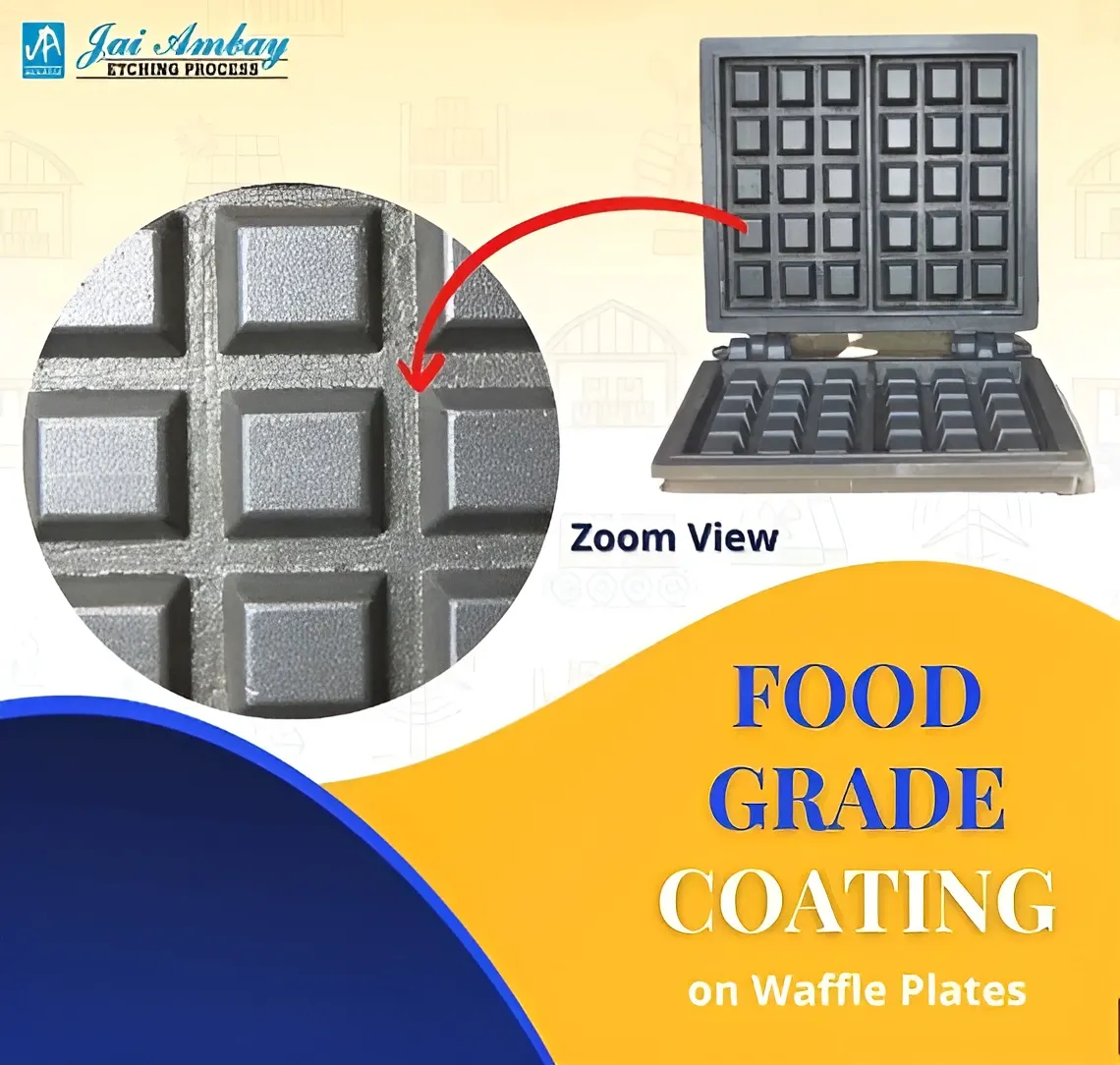
Waffle coating is a special non-stick surface treatment applied to waffle plates. It helps reduce sticking and makes it easier to remove waffles from the plate. A properly coated waffle plate can also make daily cleaning and maintenance easier.
Jai Ambay Etching Process, provide’s professional waffle coating service for waffle plates. With more than 30 years of hands-on experience in surface finishing and coating work, our team understands the importance of proper surface preparation and controlled coating application.
In this guide, we explain how waffle coating works, when a waffle plate needs recoating, the coating process, common problems, and what to check before choosing a service provider.
What Is Waffle Coating?
Waffle coating is a non-stick coating applied to the working surface of a waffle plate.
During regular use, waffle mix comes into direct contact with the coated plate. The coating creates a low-stick surface, which helps the cooked waffle release from the plate more easily.
The coating is especially important because a waffle plate has many small squares, corners, and deep areas. If the surface starts sticking, waffle material can remain inside these areas and become difficult to clean.
A good coating should cover the required plate surface evenly, including the detailed areas of the waffle pattern.
Why Do Waffle Plates Need Non-Stick Coating?
A waffle plate works again and again at high temperatures. Over time, its working surface can lose its non-stick performance.
When this happens, you may notice:
- Waffles sticking to the plate
- Pieces remaining inside the waffle pattern
- Uneven release
- More time spent cleaning the plate
- Worn or damaged coating
- Areas where the coating has started coming off
- Different results across the plate
These signs do not always mean that the complete waffle plate needs replacement.
If the plate itself is still in suitable condition, professional waffle coating may help restore the required non-stick surface.
How Does Waffle Coating Work?
The basic purpose of the coating is simple: it creates a surface that reduces sticking between the waffle and the waffle plate.
However, applying the coating correctly requires more than simply spraying a layer over an old surface.
The existing condition of the waffle plate must first be checked. Old coating, dirt, and unwanted surface deposits may need to be removed. The surface must then be properly prepared before applying a fresh coating.
This preparation is important because a coating needs a suitable base to bond correctly.
A professional waffle plate service should therefore focus on both surface preparation and coating application.
Waffle Coating Service: Step-by-Step Process
The exact process can change depending on the condition and design of the waffle plate, but a professional service generally follows a controlled sequence.
1. Waffle Plate Inspection
The first step is to inspect the plate.
The service provider checks the existing coating, working surface, corners, pattern areas, and overall condition.
This inspection helps decide what preparation is needed before recoating.
2. Removal of the Old Coating
If an old or damaged coating is present, it may need to be removed before a fresh coating is applied.
Applying a new layer over a poor surface can affect coating quality and life.
3. Surface Preparation
The waffle plate surface is prepared so that the new coating can bond properly.
This is one of the most important stages of a waffle coating service. Poor preparation can lead to an uneven finish or early coating failure.
4. Coating Application
The non-stick coating is applied in a controlled way across the required working surface.
Special attention is needed around the waffle pattern because the coating should cover corners, raised sections, and deeper areas evenly.
5. Curing
After application, the coating needs to be cured according to the coating system and process requirements.
Correct curing helps the coating develop its required properties.
6. Final Inspection
The finished waffle plate should be checked before it is returned.
The team should inspect the coating for even coverage and make sure the required areas have received the treatment correctly.
Why Surface Preparation Matters Before Waffle Coating
Many coating problems begin before the actual coating is applied.
If the surface contains old coating, dirt, deposits, or poorly prepared areas, the fresh coating may not perform as expected.
Think of the coating and plate as two layers that need to work together. A good coating cannot fully correct a badly prepared base surface.
That is why experienced coating companies spend time on preparation.
Jai Ambay Etching Process, our experience in surface finishing helps us understand this important step. The plate condition should be checked first, and the correct preparation should be completed before the coating process begins.
When Should You Consider a Waffle Coating Service?
You do not have to wait until the entire coating has failed.
Several signs can show that your waffle plate needs attention.
Waffles Start Sticking
This is one of the easiest signs to notice. If waffles that previously released easily start sticking, the working surface should be checked.
The Coating Looks Worn
Regular use can cause visible wear in some areas. Heavy-use sections may lose their non-stick performance before other areas.
Cleaning Takes Longer
When material starts sticking inside the waffle pattern, operators may need more time to clean the plate.
Release Becomes Uneven
One part of the waffle may release easily while another part sticks. This can indicate uneven wear or a problem with the existing coating.
The Existing Coating Is Damaged
Peeling, worn areas, or visible surface damage should be inspected before the plate continues in regular use.
A professional waffle plate service can inspect the plate and advise whether recoating is suitable.
Benefits of Professional Waffle Coating
A professionally applied waffle coating can provide several practical benefits.
Better Non-Stick Performance
The main purpose is to reduce sticking and support easier waffle release.
Easier Cleaning
Less sticking can mean less material remains inside the waffle pattern, making regular cleaning easier.
More Consistent Surface Condition
An evenly applied coating provides a more uniform working surface across the waffle plate.
Reuse of Suitable Waffle Plates
A worn coating does not always mean the plate itself must be replaced. If the waffle plate remains suitable for service, recoating may allow it to be used again.
Reduced Unnecessary Downtime
Maintaining waffle plates before severe coating failure can help businesses plan servicing instead of waiting for a major surface problem.
Waffle Coating Is Not Just About Applying Another Layer
One common mistake is to think that recoating means simply adding fresh coating over the old one.
Professional coating work requires inspection and preparation first.
If the existing surface is damaged or contaminated, adding another layer may not solve the actual problem.
A proper waffle coating service should consider:
- Existing coating condition
- Waffle plate surface condition
- Areas of heavy wear
- Pattern depth
- Corners and detailed areas
- Surface preparation
- Correct coating application
- Proper curing
- Final inspection
This complete process is more important than simply making the plate look newly coated.
Common Waffle Plate Coating Problems
Understanding common problems can help you identify when servicing is needed.
Sticking in Deep Areas
The detailed shape of a waffle plate includes corners and deeper sections. These areas can become difficult to use when non-stick performance reduces.
Uneven Coating Wear
Some parts of the plate may receive more use or wear than others. This can lead to different release performance across the working area.
Coating Damage
Poor handling, cleaning practices, or long-term use can damage the coated surface.
Poor Coating Bond
If the surface was not prepared correctly before coating, the new layer may not bond as expected.
Build-Up on the Surface
Repeated use without proper cleaning can leave deposits on the plate and affect its working surface.
Correct servicing starts by identifying the actual problem rather than applying the same treatment to every plate.
How to Take Care of Waffle Coating
Good care can help protect the coated surface.
Follow the cleaning and operating instructions given for your specific waffle plate and coating system. Avoid cleaning methods that can scratch or damage the non-stick surface.
It is also useful to inspect waffle plates regularly rather than waiting until sticking becomes severe.
If you notice a change in release, coating appearance, or cleaning time, have the plate checked.
Early inspection can help determine whether the surface needs cleaning, maintenance, or professional recoating.
How to Choose a Waffle Coating Service Provider
Experience matters when selecting a waffle coating service.
Do not choose a provider based only on price. Ask how they inspect the waffle plate, prepare the surface, apply the coating, and check the completed work.
A reliable service provider should be able to explain:
- How the old surface is checked
- How the plate is prepared
- What coating process is used
- How detailed waffle areas are covered
- How the coating is cured
- How the finished surface is inspected
Clear answers show that the provider understands the full coating process, not just coating application.
Waffle Coating Service by Jai Ambay Etching Process
Jai Ambay Etching Process is a professional surface finishing and coating service provider with 30+ years of hands-on experience.
Our experience helps us understand an important point: a good coating result starts with the condition of the surface underneath it.
For every waffle plate service, the plate should be checked before work begins. The required preparation can then be planned according to the existing surface and coating condition.
Our focus is on controlled surface preparation, professional coating application, and careful finishing.
If your waffle plates have started sticking, show uneven coating wear, or need recoating, our team can review their condition and suggest a suitable service.
What to Share Before Sending Waffle Plates for Coating
Providing clear details helps a coating service understand your requirement before the work begins.
You can share:
- Photos of the waffle plate
- Plate dimensions
- Number of plates
- Current coating condition
- Areas where sticking occurs
- Details of any visible coating damage
- Your service requirement
Good photos are especially useful because they allow the service team to understand the basic surface condition before physical inspection.
The final process should still be confirmed after inspecting the actual waffle plate.
Why Experience Matters in Waffle Plate Service
Coating quality depends on more than the coating itself.
Surface inspection, preparation, application, curing, and final checking all affect the result.
With more than 30 years of hands-on experience, Jai Ambay Etching Process brings practical surface finishing knowledge to each project.
Instead of treating every waffle plate in exactly the same way, the condition of the plate should guide the preparation and coating work.
This approach helps create a properly prepared and evenly coated working surface.
Conclusion
Waffle coating plays an important role in maintaining the non-stick working surface of waffle plates. When the existing coating becomes worn or damaged, waffles may start sticking and cleaning can become more difficult.
Professional recoating involves much more than applying a fresh layer. The waffle plate needs inspection, proper surface preparation, controlled coating application, curing, and final checking.
If your waffle plates need attention, Jai Ambay Etching Process provides professional waffle coating service backed by 30+ years of hands-on surface finishing experience. Our team can inspect your waffle plates and recommend the right service based on their condition.
Frequently Asked Questions About Waffle Coating
What is waffle coating?
Waffle coating is a non-stick surface treatment applied to waffle plates. It helps reduce sticking and supports easier waffle release and cleaning.
When does a waffle plate need recoating?
A waffle plate may need recoating when waffles start sticking, release becomes uneven, cleaning becomes difficult, or the existing coating shows visible wear or damage.
Can an old waffle plate be recoated?
It depends on the condition of the waffle plate. A professional waffle plate service should inspect the plate first and confirm whether recoating is suitable.
Why is surface preparation important before waffle coating?
Proper preparation removes unwanted surface problems and gives the new coating a suitable base. Poor preparation can affect coating quality and performance.
How do I choose a waffle coating service?
Choose a provider with practical coating and surface preparation experience. Ask about inspection, preparation, coating application, curing, and final quality checks.
Who provides professional waffle coating service?
Jai Ambay Etching Process provides professional waffle coating services backed by more than 30 years of hands-on experience in surface finishing and coating work.
