


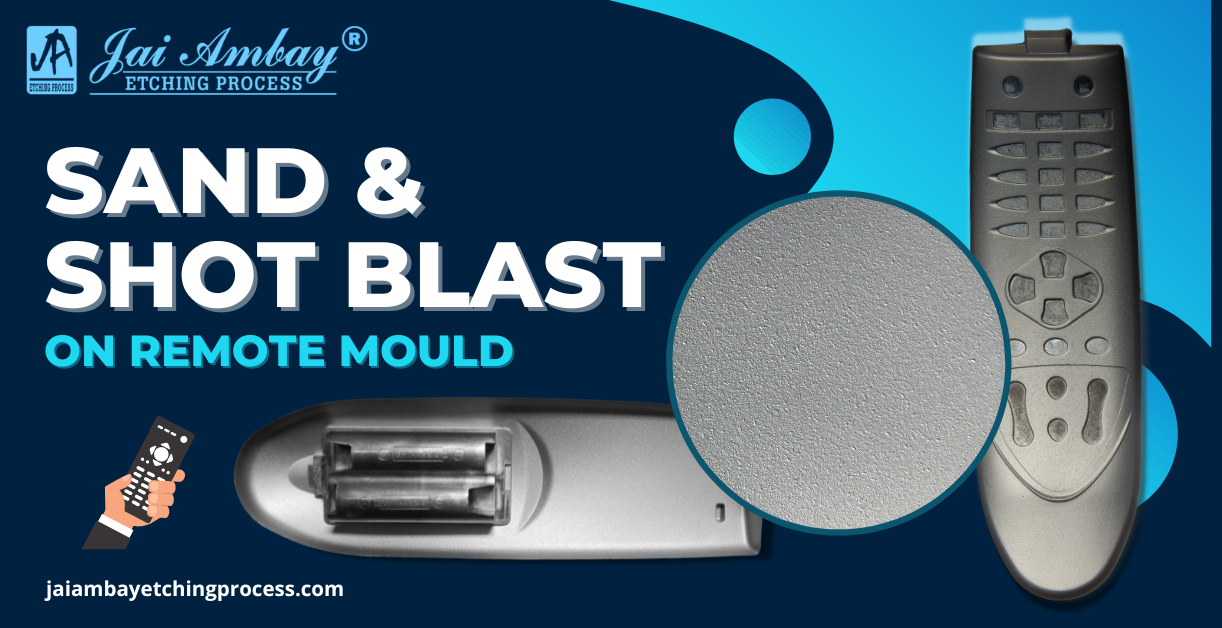
Sand & Shot Blasting for Moulds: Process, Benefits, Applications and Surface Preparation
A clean and properly prepared mould surface is important for achieving a good finish. Over the time, moulds can develop rust, old coating marks, dirt, and uneven surfaces. These problems can affect the final finish and make further surface treatment difficult.
This is where sand & shot blasting plays an important role. It helps clean the mould surface, remove unwanted layers, and prepare it for the next finishing process.
Many manufacturers use blasting before mould polishing, chemical etching, coating, or other surface treatments. However, choosing the right blasting method is important because every mould has different surface requirements.
In this guide, we explain how sand & shot blasting works, its benefits, the difference between both methods, and how to choose the right process for your mould.
What Is Sand & Shot Blasting?
Sand & shot blasting is a surface cleaning and preparation process that uses small blasting particles to clean or change the finish of a mould surface.
During the process, a blasting machine directs these particles toward the mould at a controlled speed. The particles hit the surface and help remove rust, old coatings, dirt, and unwanted surface layers.
The process can also create a uniform matte finish when required.
Although both methods use blasting particles, they work differently.
Sand blasting commonly uses fine abrasive particles to clean the mould and create a controlled surface finish.
Shot blasting uses small rounded particles that strike the mould surface. Depending on the equipment and settings, it can clean the surface or create a specific surface effect.
The right method depends on the mould condition, required finish, and areas that need treatment.
Why Is Sand & Shot Blasting Important for Moulds?
A mould may look clean from the outside but still have rust, old coating, or small surface marks.
If these problems remain, they can affect the next finishing process.
Professional sand & shot blasting helps prepare the surface before further work begins.
1. Removes Rust and Surface Dirt
Rust and dirt can develop on moulds during storage, handling, or regular use.
Blasting helps remove these unwanted layers and prepares the surface for further treatment.
2. Removes Old Coatings
Some moulds need their existing coating removed before a new coating can be applied.
A suitable blasting process can remove old coating layers without unnecessary manual work.
3. Creates an Even Surface Finish
Blasting can create a controlled matte or slightly rough finish on selected mould areas.
The final appearance depends on the blasting particles, pressure, and process settings.
4. Prepares Moulds for Coating
Some coatings need a clean surface with the correct level of roughness.
Blasting helps prepare the mould surface so the coating can bond properly.
5. Supports Mould Maintenance
Blasting can also help during mould cleaning and repair work.
It removes unwanted surface layers and makes it easier to inspect the mould before the next process.
How Does the Sand & Shot Blasting Process Work?
The sand & shot blasting process follows several steps. Each step helps protect the mould and achieve the required surface condition.
Step 1: Mould Inspection
Before starting, the technician checks the mould surface.
The inspection helps identify rust, old coating, dirt, damaged areas, and surfaces that should not be blasted.
The team also checks the mould design and required finish.
Step 2: Selecting the Blasting Method
The technician chooses sand blasting or shot blasting based on the mould condition.
The choice also depends on how much surface cleaning is required and what finish the mould needs.
Step 3: Protecting Important Areas
Not every part of the mould should receive blasting.
Important areas, such as highly polished surfaces, sharp edges, sealing areas, and other sensitive features, may need protection.
Proper masking helps prevent unwanted changes to these areas.
Step 4: Blasting the Mould Surface
The technician directs the blasting particles toward the selected surface.
The machine settings control the strength and effect of the blasting process.
Correct pressure, particle size, distance, and working angle help achieve a more even result.
Step 5: Cleaning and Final Inspection
After blasting, the technician removes loose particles and checks the finished surface.
The team looks for missed areas, unwanted marks, and differences in surface appearance.
The mould can then move to the next finishing process if required.
Sand Blasting vs Shot Blasting: What Is the Difference?
Both methods help clean and prepare mould surfaces, but they use different blasting particles and produce different results.
| Sand Blasting | Shot Blasting |
| Uses fine abrasive particles | Uses rounded blasting particles |
| Suitable for controlled surface cleaning | Suitable for cleaning and selected surface treatments |
| Can create a fine matte finish | Can create a different surface effect |
| Often used for detailed mould preparation | Often used for suitable larger or more open mould areas |
| Requires careful pressure control | Requires correct particle and machine selection |
Neither method is automatically better for every mould.
The correct choice depends on the mould design, surface condition, required finish, and level of cleaning.
A professional blasting service provider should inspect the mould before recommending either process.
Where Is Sand & Shot Blasting Used on Moulds?
Manufacturers use sand & shot blasting for different mould cleaning and finishing requirements.
Injection Moulds
Injection moulds may need blasting to remove surface dirt, rust, or old coating before further treatment.
The process must protect important cavity details and working surfaces.
Plastic Moulds
Plastic moulds sometimes require a controlled matte finish or surface preparation before coating.
Blasting settings should match the required mould finish.
Automotive Moulds
Automotive moulds often contain detailed surfaces, curves, and complex shapes.
Selected areas may need careful cleaning before polishing, coating, or other finishing work.
Appliance Moulds
Appliance moulds may require blasting during maintenance or before a new surface treatment.
Proper surface preparation helps maintain a consistent finish.
Industrial Moulds
Industrial moulds can develop rust, old coating, and surface marks during use.
Blasting can help clean these areas before inspection, repair, or further finishing.
Sand & Shot Blasting for Mould Surface Preparation
One of the most important uses of sand & shot blasting is preparing a mould for another finishing process.
However, blasting is not always required before every treatment.
The correct preparation method depends on the surface condition and the finish that follows.
Before Mould Coating
A coating needs a properly prepared surface.
Rust, dirt, and old coating layers can affect how well the new coating stays attached.
Controlled blasting may help create the required surface condition.
However, some coatings need a smoother surface, so the coating requirements should always be checked first.
Before Chemical Etching
Chemical etching creates texture on a mould using a controlled chemical process.
Before etching, the mould surface must be clean and properly prepared.
In some cases, blasting may help remove unwanted surface layers. However, the final preparation method depends on the texture design and required finish.
You can also learn more about our chemical etching services for mould surface texturing.
Before Laser Engraving
A clean mould surface helps the technician inspect the area before engraving.
However, blasting is not necessary for every laser engraving job. Some moulds require polishing or another cleaning method instead.
The surface preparation should match the engraving depth, design, and final appearance.
Explore our laser engraving services to understand how detailed patterns and permanent designs are created on moulds.
Can Sand & Shot Blasting Damage a Mould?
Blasting is useful, but incorrect settings can affect the mould surface.
Excessive pressure, unsuitable blasting particles, or poor handling may create unwanted roughness or damage important details.
Possible problems include:
- Uneven surface finish
- Loss of fine details
- Unwanted surface marks
- Changes to sharp edges
- Excessive surface roughness
- Damage to polished areas
This is why mould blasting requires proper process control.
An experienced technician should select the correct blasting particles and machine settings according to the mould.
Sensitive areas should also be protected before work begins.
Important: Blasting should not change the required mould dimensions or damage working surfaces. Always check the mould requirements before selecting the process.
Sand & Shot Blasting vs Mould Polishing
Many manufacturers confuse blasting with polishing because both processes change the mould surface.
However, they serve different purposes.
Sand & shot blasting mainly helps clean the surface, remove unwanted layers, or create a controlled rough or matte finish.
Mould polishing removes fine surface marks and creates a smoother finish. Depending on the requirement, polishing can produce anything from a basic smooth surface to a mirror finish.
For example, a mould with rust or old coating may need blasting before further work.
A mould that requires a high-gloss surface will usually need polishing instead.
In some projects, both processes may be necessary, but they must happen in the correct order.
Common Mistakes to Avoid During Mould Blasting
Even a small mistake can affect the final surface condition.
Here are some common problems manufacturers should avoid.
Choosing the Wrong Blasting Method
Sand blasting and shot blasting do not always produce the same result.
Choose the method according to the mould surface and required finish.
Using Too Much Pressure
High blasting pressure can create excessive roughness or damage fine mould details.
The technician should use controlled settings.
Ignoring Sensitive Mould Areas
Sharp edges, detailed cavities, and polished surfaces may need protection.
Blasting these areas without proper planning can affect the mould.
Skipping Surface Inspection
Every mould has a different condition.
Starting the process without checking the mould may lead to unnecessary work or unwanted surface changes.
Not Cleaning After Blasting
Loose blasting particles should be removed before the mould moves to another finishing process.
Proper cleaning helps prevent contamination during later work.
How to Choose the Right Sand & Shot Blasting Service
Choosing the right sand & shot blasting service is important because moulds need careful handling.
A good service provider should understand the mould design, surface condition, and required result before starting work.
Before selecting a company, check whether it can:
- Inspect the mould before blasting
- Recommend the correct blasting method
- Select suitable blasting particles
- Control blasting pressure
- Protect sensitive mould areas
- Handle detailed mould surfaces
- Clean the mould after blasting
- Inspect the final surface finish
The provider should also explain whether blasting is necessary or whether another surface preparation method would be more suitable.
Good process planning helps avoid damage, unnecessary work, and additional finishing costs.
Professional Sand & Shot Blasting Services at Jai Ambay Etching Process
Jai Ambay Etching Process has over 30 years of hands-on experience in mould texturing and surface finishing.
We provide professional sand & shot blasting services for moulds, injection moulds, and plastic moulds.
Our team understands that every mould has different surface requirements. That is why we inspect the mould condition and required finish before recommending a blasting process.
Along with blasting, we provide other mould finishing services, including:
- Mould polishing
- 5 axis laser texturing
- Chemical etching
- Laser engraving
- Mould surface finishing
Our facility is located in the Bawana Industrial Area, New Delhi.
By offering different surface finishing services under one roof, we help manufacturers select the process that suits their mould requirements.
We focus on proper surface preparation, careful handling, and consistent finishing quality.
What Affects the Cost of Sand & Shot Blasting?
The cost of sand & shot blasting depends on the mould and the work required.
Important factors include:
- Mould size and weight
- Surface condition
- Amount of rust or old coating
- Required blasting method
- Surface area to be treated
- Mould design and complexity
- Areas that need protection
- Required surface finish
A small mould that needs light cleaning may require less work than a large mould with old coating and complex cavity areas.
For an accurate quotation, share the mould size, photographs, surface condition, and required finish with the service provider.
Conclusion
Sand & shot blasting is an important process for cleaning and preparing mould surfaces.
It helps remove rust, old coatings, and unwanted surface layers. It can also create a controlled matte finish or prepare the mould for selected coating and finishing processes.
However, the right method depends on the mould design, surface condition, and required result.
Incorrect blasting can damage fine details or change the surface finish. That is why proper inspection and process control are important.
If your mould needs professional cleaning or surface preparation, contact Jai Ambay Etching Process. Our experienced team can inspect your requirements and recommend a suitable sand & shot blasting service for your mould.
Frequently Asked Questions
1. What is sand & shot blasting used for on moulds?
Sand & shot blasting helps remove rust, old coatings, dirt, and unwanted surface layers from moulds. It can also prepare selected mould surfaces for further finishing.
2. What is the difference between sand blasting and shot blasting?
Sand blasting commonly uses fine abrasive particles, while shot blasting uses rounded particles. The right method depends on the mould surface and required finish.
3. Can sand & shot blasting damage a mould?
Incorrect blasting pressure or unsuitable particles can damage fine details or change the surface roughness. Proper settings and surface protection help reduce this risk.
4. Is blasting necessary before mould coating?
Blasting may be needed when the mould has rust, old coating, or requires a specific surface condition. The correct preparation depends on the coating requirements.
5. Can sand & shot blasting remove rust from injection moulds?
Sand & shot blasting can remove rust from suitable injection mould surfaces. Sensitive cavity areas and important mould details need careful protection during the process.
6. Where can I get sand & shot blasting services for moulds in Delhi?
Jai Ambay Etching Process provides sand & shot blasting services for moulds, injection moulds, and plastic moulds from its facility in Bawana Industrial Area, New Delhi.
