


How Laser Texturing Improves Plastic Product Finish
Plastic products are all around us. From the plastics used in cars and home appliances to mobile phones and medical equipment, plastics play an important role in our daily lives. Unfortunately, plastic products are also associated with poor finish. For instance, plastic products may have a shiny finish or may show marks of the mold used in the manufacturing process. These are just a few problems associated with plastic products. Laser texturing provides a solution for all these problems. Laser texturing is a modern technology that has improved the finish of plastic products. It has improved the finish of plastic products by providing a clean and attractive finish.
The Problem with Traditional Plastic Surface Finishing
Before the advent of modern technology like lasers, plastic products were manufactured using traditional methods. Traditional methods of plastic product manufacturing involve the use of processes such as chemical etching and mould polishing. These processes are used for mould texture creation. There are several problems with the traditional processes used for plastic product manufacturing. For instance:
- Surface patterns are not consistent
- Difficulty in controlling the details of the pattern
- Difficulty in replicating the same pattern again and again
How Laser Texturing Works in Plastic Mould Manufacturing
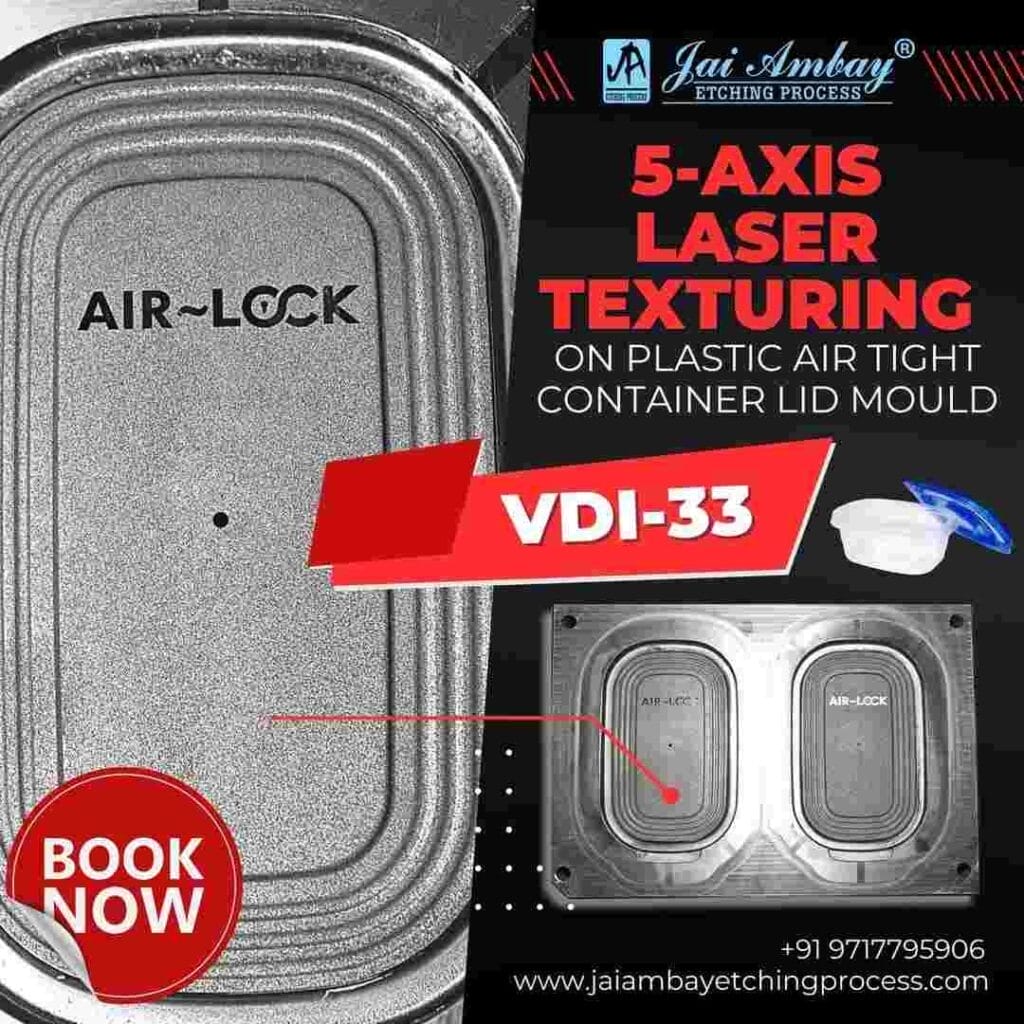
The laser texturing method employs a precise beam of laser light, which produces a series of minute patterns on the mold. The beam of the laser removes minute layers of metal from the mold.
The result is a textured mould. When the plastic is injected into the mould during the moulding process, it takes on the same texture as the mould, giving it a similar texture.
The steps involved in the process of laser texturing are as follows:
- Design of the texture by engineers
- The laser machine reads the data from the design
- The laser produces a series of micro-patterns on the mold
- The mould produces a series of textured plastic products
How Laser Texturing Works in Plastic Mold Manufacturing
The laser texturing method employs a precise beam of laser light, which produces a series of minute patterns on the mold. The beam of the laser removes minute layers of metal from the mold.
The result is a textured mould. When the plastic is injected into the mold during the molding process, it takes on the same texture as the mold, giving it a similar texture.
The steps involved in the process of laser texturing are as follows:
- Design of the texture by engineers
- The laser machine reads the data from the design
- The laser produces a series of micro-patterns on the mold
- The mold produces a series of textured plastic products
Automotive Interior Panel
For example, let’s consider a car’s dashboard panel.
If it’s not textured, it may look shiny and will be prone to scratches.
This will reduce the premium look and feel of the interior.
By using laser texturing in the mould design, manufacturers can produce a fine matte finish using micron texturing.
The benefits are:
- Smooth matte finish
- More resistant to scratches
- No reflections from sunlight
- More premium look and feel
- This is why most automotive manufacturers are using laser VDI finish instead of chemical textures.
Key Benefits of Laser Texturing
Manufacturers use laser texturing for a number of important reasons:
- High precision in surface patterns
- Good repeatability
- More durability in mold textures
- Clean and eco-friendly process
- Quick and faster process adjustments
- Enhances product finish and appearance
- This is extremely important in producing more complex textures that were previously impossible in surface finish and mold design.
It also allows designers to create complex textures that were impossible with traditional mold surface finishing.
Conclusion
Surface finish is an important factor in the quality of plastic products. Traditional processes may not provide the required accuracy and reliability in this aspect. Laser texturing is a modern technology that has been widely used in the industry. It helps create precise mold texture and improve the quality of the product’s appearance.
Frequently Asked Questions
What is the meaning of laser texturing in plastic molds?
Laser texturing is a technique whereby a pattern is produced on the mold’s surface by the use of a laser beam. This pattern is then imparted onto the plastic part during the molding process.
What is a laser VDI finish?
A laser VDI finish refers to a standard texture produced by the use of lasers to achieve a given roughness for plastic parts.
What is micron texturing?
Micron texturing refers to the production of extremely small patterns on the mold’s surface. These patterns are measured in terms of microns. This texturing improves the quality of the part’s surface and offers an improved grip or appearance.
Why is laser dull finishing used?
Laser dull finishing is used to reduce the shine and glare produced by plastic surfaces. It offers a soft matte appearance for the part and improves the design.
