


Industrial Mould Polishing
Table of Contents
Mould Polishing: Importance, Process, and Benefits
Introduction
Mould Polishing: is a crucial step in the mould manufacturing process. It plays a vital role in determining the final quality, appearance, and performance of the products made using the mould. Whether the mould is used for plastic injection, die casting, or rubber parts, polishing ensures that the surface is smooth, free of defects, and capable of producing high-quality components.
What is Mould Polishing:
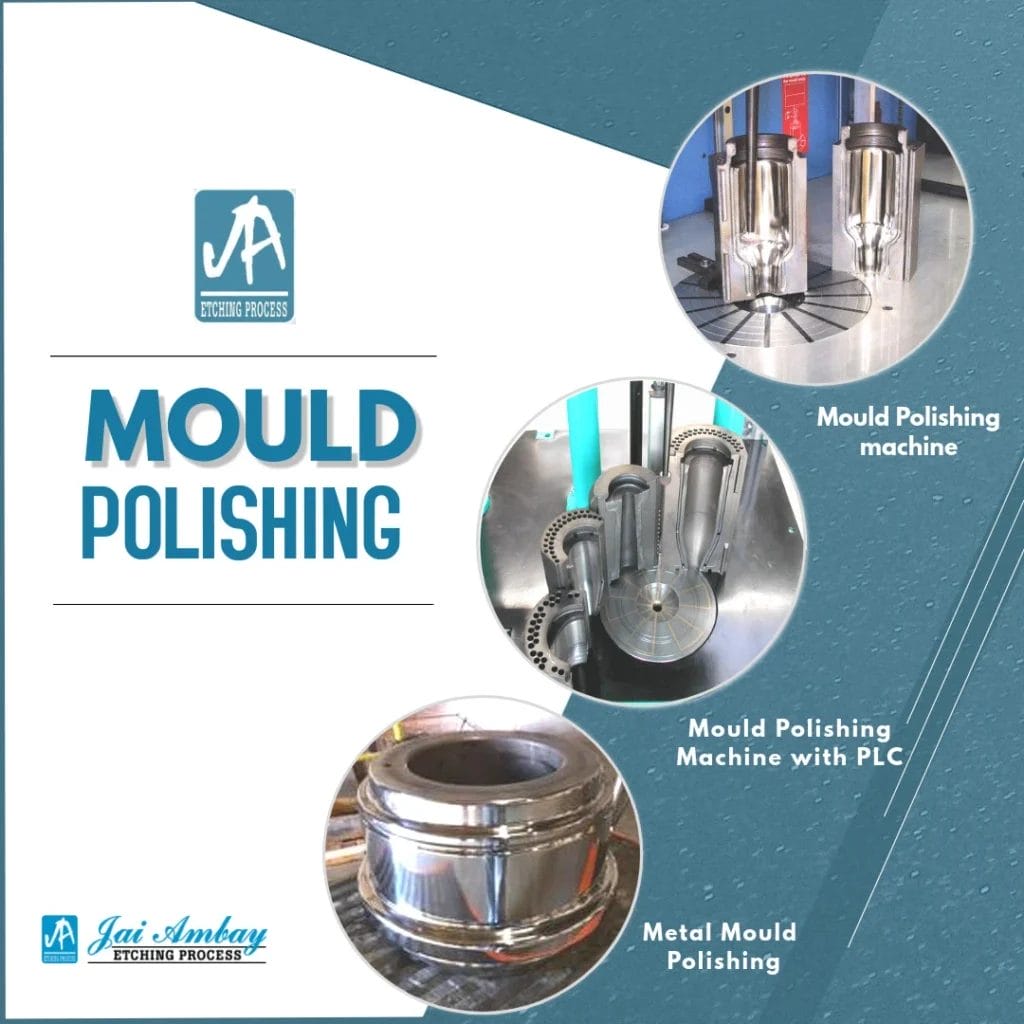
Mould polishing is the process of improving the surface finish of a mould cavity or core by removing machining marks, scratches, and irregularities. The main purpose is to make the surface smooth and shiny, enhancing the appearance of the final product and improving its functionality.
Unlike simple surface cleaning, mould polishing is a technical process that requires precision tools, abrasives, and skilled workmanship. It can range from basic surface improvement to mirror-like finishing depending on the mould’s use.
Why is Mould Polishing: Important?
- Improved Product Appearance
A well-polished mould ensures that the final product has a smooth, glossy, and appealing finish, especially for transparent or decorative items. - Easy Part Release
A polished mould surface reduces friction between the mould and the product, making it easier to remove the finished part without damage. - Enhanced Durability
Polishing removes small defects that could lead to stress cracks or corrosion, extending the life of the mould. - Higher Efficiency
Smooth mould surfaces reduce material sticking and improve cycle time during production. - Better Performance for High-Precision Products
Industries like automotive, electronics, and medical devices demand high-quality finishes — which is only possible through professional mould polishing.
Types of Mould Polishing
- Mechanical Polishing
This is the most common method. It uses abrasive stones, sandpaper, and diamond paste to gradually refine the surface. It requires great skill and experience. - Chemical Polishing
In this process, chemicals are used to dissolve microscopic layers from the surface. It provides uniform polishing and is suitable for complex shapes. - Electrolytic Polishing
Also known as electro-polishing, this method uses an electrolytic solution and electric current to smooth the surface. It gives a mirror-like finish and is ideal for stainless steel moulds. - Ultrasonic Polishing
Ultrasonic energy is used to move polishing tools at high speed. It’s effective for fine polishing of intricate or detailed mould areas.
Mould Polishing Process (Step-by-Step)
- Preliminary Surface Preparation
The mould surface is cleaned and any machining marks or rough areas are removed. - Rough Polishing
Coarse abrasive stones are used to remove deep scratches and tool marks. - Fine Polishing
Finer abrasives like emery paper or diamond paste are used to achieve a smooth finish. - Mirror Polishing
For high-gloss or transparent moulds, polishing is continued with diamond paste of smaller particle sizes until a mirror-like shine appears. - Inspection and Cleaning
The mould surface is checked under magnification to ensure consistency and cleanliness before final use.
Tools and Materials Used in Mould Polishing
- Abrasive stones
- Sandpaper (various grits)
- Diamond paste and compound
- Felt or wool polishing wheels
- Polishing sticks and rotary tools
- Ultrasonic or electric polishers
Each tool and material is chosen based on the mould material (steel, aluminum, etc.) and the desired finish.
Tips for Effective Mould Polishing
- Always move polishing tools in a single direction to avoid swirl marks.
- Use the right abrasive size for each polishing stage.
- Keep the mould surface clean during polishing to prevent contamination.
- Avoid excessive heat buildup, which can damage the surface.
- Finish polishing in a dust-free environment for a clean mirror finish.
Applications of Mould Polishing
Mould polishing is widely used in industries such as:
- Plastic Injection Moulding (bottles, containers, lenses, etc.)
- Die Casting (automotive and machinery components)
- Rubber Moulding
- Medical and Optical Components
- Consumer Goods Manufacturing
Conclusion
Mould polishing is more than just making a surface shiny — it’s about achieving precision, quality, and efficiency in manufacturing. A properly polished mould can produce better products, reduce production costs, and increase mould life.
Whether done manually or through advanced polishing technologies, the process requires expertise, patience, and attention to detail.
