


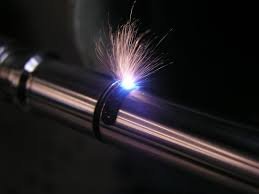
Laser Marking – Permanent Precision for Every Surface:
Laser Marking – Informative Overview
| Feature / Parameter | Description |
|---|---|
| Process Name | Laser Marking |
| Technology Type | Non-contact Laser Surface Marking Technology |
| Working Principle | A high-intensity laser beam alters the surface layer of the material through heat, oxidation, or color change to create permanent marks. |
| Marking Methods | Annealing, Engraving, Etching, Foaming, Carbonization, and Color Change Marking (depending on material). |
| Material Compatibility | Metals (Steel, Aluminum, Copper, Brass), Plastics, Ceramics, Glass, and Coated or Painted Surfaces. |
| Laser Types Used | Fiber Laser, CO₂ Laser, UV Laser, Green Laser. |
| Marking Depth | Up to 0.5 mm (varies by material and laser power). |
| Precision & Accuracy | High precision up to ±0.001 mm, suitable for micro text, barcodes, and intricate logos. |
| Key Advantages | Permanent and non-contact marking, no consumables, minimal maintenance, eco-friendly, high contrast, and resistant to wear or corrosion. |
| Applications | Automotive parts, medical instruments, aerospace components, electronic devices, packaging, and jewelry branding. |
| Software Compatibility | Supports CAD/CAM, CorelDRAW, AutoCAD, and vector-based design software. |
| Operational Benefits | Fast marking speed, high consistency, low operational cost, and ability to mark curved or irregular surfaces. |
Laser Marking
is a high-precision, non-contact process used to create permanent markings such as logos, barcodes, serial numbers, QR codes, and text on a wide variety of materials. Unlike traditional printing or labeling methods, laser marking uses a focused beam of light to alter the surface properties of a material without using inks, solvents, or physical tools—resulting in highly durable, accurate, and maintenance-free marks.
The process works by directing a laser
beam onto the surface, where the concentrated energy causes localized heating, oxidation, or carbonization, depending on the material. This changes the appearance or texture of the surface, producing crisp and legible marks with high contrast. Advanced systems allow for precise control over depth, color, and pattern, enabling both functional and decorative applications.
Laser marking
is compatible with numerous materials including metals (stainless steel, aluminum, brass), plastics, ceramics, glass, and coated surfaces. It is widely used across industries such as automotive, electronics, medical devices, aerospace, tools, packaging, and jewelry for part identification, traceability, and branding.
The advantages of laser marking
include no consumables, minimal maintenance, zero contact with the workpiece, and exceptional durability—ensuring that the markings remain intact even under harsh environmental conditions such as heat, abrasion, and corrosion.
Modern laser marking technologies, including fiber, CO₂, UV, and green lasers, allow for specific wavelength selection to match different materials and applications, ensuring optimum efficiency and marking quality.
In essence, Laser Marking is the ideal solution for industries demanding precision, permanence, and performance, offering an eco-friendly and cost-effective alternative to traditional marking methods.
