


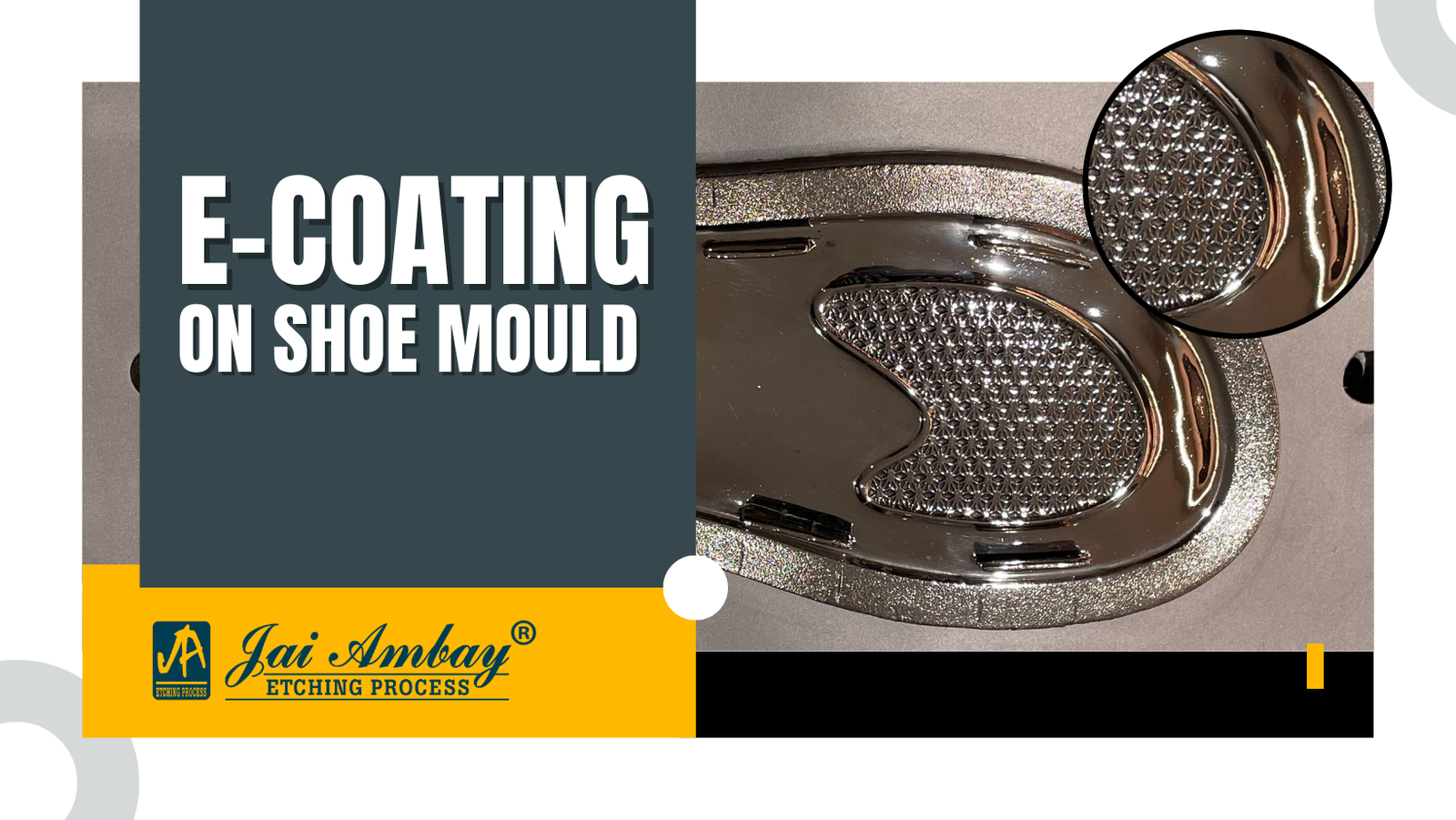
E-Coating for Moulds: Benefits, Process, Applications and Complete Guide
Moulds need a good surface finish to work properly and last longer. During regular use, mould surfaces may face wear, rust, sticking, and other problems. These issues can affect mould performance and increase maintenance costs.
This is where E-Coating can help. Jai Ambay Etching Process, we provide E-Coating services using Electroless Nickel Plating (ENP) for moulds. This process adds a thin, even nickel layer to the mould surface to improve protection and performance.
Unlike some traditional coating methods, electroless nickel plating does not use electricity to apply the coating. It uses a controlled chemical process to create an even layer, including on many complex mould surfaces.
In this guide, you will learn what E-Coating is, how electroless nickel plating works, its benefits, applications, and how to choose the right coating service for your mould.
What Is E-Coating for Moulds?
E Coating, as offered by Jai Ambay Etching Process, refers to Electroless Nickel Plating (ENP) for mould surfaces.
Electroless nickel plating adds a protective nickel layer to the mould through a chemical reaction. The process does not require an electric current.
The coating helps protect the mould surface against corrosion and wear. It can also improve surface hardness and provide a smooth, even finish.
One major advantage of ENP is its ability to create a uniform coating on many complex mould shapes.
Important: Electroless nickel plating is different from traditional electrophoretic E-Coating, which uses electricity. Our service specifically uses the electroless nickel process.
Why Do Moulds Need E-Coating?
Moulds work under different conditions during regular production. Over time, the surface may develop wear, rust, or damage.
A suitable coating helps protect the mould and may reduce the need for frequent maintenance.
Manufacturers choose E-Coating for several reasons:
- Protect mould surfaces from corrosion
- Improve resistance to surface wear
- Increase surface hardness
- Create an even protective layer
- Protect difficult mould areas
- Support longer mould service life
- Reduce some maintenance problems
However, the coating result depends on the mould condition, coating thickness, and working environment.
Not every mould needs the same coating. A professional service provider should inspect the mould before recommending ENP.
How Does the E-Coating Process Work?
The E-Coating process for moulds follows several important steps. Each step helps create a clean and consistent nickel layer.
Step 1: Mould Inspection
The team first checks the mould surface for rust, scratches, old coatings, damage, and other problems.
This inspection helps identify whether the mould needs cleaning, polishing, or repair before coating.
Step 2: Surface Cleaning
The mould surface must be clean before applying the nickel layer.
The team removes oil, dirt, and other unwanted deposits. Proper cleaning helps the coating attach to the surface.
Step 3: Surface Preparation
The mould may need further preparation depending on its condition.
The team prepares the surface using a suitable cleaning and activation process.
Areas that should not receive coating may need special protection.
Step 4: Electroless Nickel Plating
The prepared mould goes through a controlled chemical plating process.
The chemical reaction deposits a thin nickel layer onto the exposed mould surface.
Because the process does not depend on electric current, it can create an even coating on many complex mould shapes.
Step 5: Final Inspection
After plating, the team checks the coating condition, appearance, and required thickness.
The finished mould should meet the agreed coating requirements before delivery.
Main Benefits of E-Coating for Moulds
1. Better Corrosion Protection
Rust and corrosion can damage mould surfaces and affect their working condition.
E-Coating creates a protective nickel layer that helps reduce direct contact between the mould surface and its surroundings.
The level of protection depends on the coating quality and working conditions.
2. Improved Wear Resistance
Regular mould use can cause surface wear.
Electroless nickel plating can improve wear resistance and help protect the mould during production.
This may reduce some surface damage and maintenance needs.
3. Uniform Coating Thickness
One of the main benefits of ENP is its ability to create a more even coating than many conventional electroplating methods.
It can cover many curved areas, corners, and complex mould surfaces.
However, deep or closed areas still need proper access to the plating solution.
4. Improved Surface Hardness
Electroless nickel plating can increase surface hardness.
The final hardness depends on the coating type and whether the process includes suitable heat treatment.
A harder surface may help reduce wear during regular mould use.
5. Protection for Complex Mould Shapes
Many moulds have side walls, pockets, ribs, and curved areas.
ENP can provide a consistent coating on many of these areas when the plating solution can reach them properly.
6. Longer Mould Service Life
A properly selected coating may help protect the mould from corrosion and wear.
This can support longer service life and reduce some maintenance costs.
However, coating cannot correct every mould problem. Proper mould care remains important.
Which Moulds Can Use E-Coating?
E-Coating is suitable for many mould applications where corrosion protection, wear resistance, or an even protective layer is required.
Common applications include:
- Injection moulds
- Plastic moulds
- Automotive component moulds
- Appliance moulds
- Packaging moulds
- Consumer product moulds
- Industrial moulds
- Complex cavity moulds
The coating must suit the mould’s working conditions and required surface finish.
Before coating, the service provider should review the mould dimensions, surface condition, and areas that need protection.
Why Coating Thickness Matters
Coating thickness is an important part of the E-Coating process.
A coating that is too thin may not provide the required protection. A coating that is too thick may affect important mould dimensions.
This matters most in areas with tight clearances.
The required thickness depends on:
- Mould design
- Surface condition
- Required protection
- Working conditions
- Dimensional requirements
ENP adds material to the mould surface. Therefore, manufacturers should consider the coating thickness before finalising critical dimensions.
There is no single coating thickness suitable for every mould.
Surface Preparation Before E-Coating
Even a high-quality coating may fail if the mould surface is not prepared correctly.
Before E-Coating, the team should check for:
- Rust
- Oil and dirt
- Old coatings
- Surface damage
- Scratches
- Repair marks
- Areas requiring protection
Some moulds may need polishing before coating.
However, polishing is not always necessary. The preparation method depends on the mould condition and required finish.
Proper surface preparation helps the nickel layer attach correctly and reduces the risk of coating defects.
Common E-Coating Problems and How to Avoid Them
Understanding common coating problems can help manufacturers avoid costly rework.
Uneven Coating
Poor cleaning, trapped air, or limited solution access may affect coating quality.
Prevention: Use proper mould preparation and controlled plating conditions.
Poor Coating Adhesion
If the mould surface contains dirt, oil, or unwanted deposits, the coating may not attach properly.
Prevention: Clean and prepare the surface before plating.
Surface Marks
Existing scratches, pits, or repair marks may remain visible after coating.
Prevention: Inspect the mould and correct surface defects where required.
Incorrect Coating Thickness
An incorrect thickness may affect protection or mould dimensions.
Prevention: Confirm the required coating thickness before starting.
Coating Damage During Use
Harsh working conditions or poor maintenance may damage the coating over time.
Prevention: Choose a suitable coating and follow proper mould maintenance practices.
E-Coating vs Chemical Etching
E-Coating and chemical etching are different mould surface treatments.
E-Coating adds a protective nickel layer to the mould surface. Its main purpose is to improve surface protection and wear resistance.
Chemical etching removes a controlled amount of metal to create a grain, pattern, or texture.
| E-Coating (ENP) | Chemical Etching |
| Adds a nickel layer | Removes a small amount of metal |
| Helps protect against corrosion | Creates surface textures |
| Can improve wear resistance | Creates grains and patterns |
| Changes surface dimensions by adding thickness | Changes the surface through controlled removal |
Both processes serve different purposes.
Manufacturers should choose the method according to the required result.
Learn more about our chemical etching services for mould surface texturing.
E-Coating and Laser Engraving
Laser engraving creates permanent designs, patterns, identification marks, or fine details on mould surfaces.
E-Coating serves a different purpose by adding a protective nickel layer.
Some mould projects may require both services.
However, the correct process order depends on the engraving depth, coating thickness, and required result.
If the mould needs both treatments, the service provider should review the requirements before starting.
Explore our laser engraving services for moulds.
How to Choose the Right E-Coating Service Provider
Choosing an experienced coating service provider is important for mould quality.
Before selecting a company, check whether it can:
- Inspect the mould properly
- Understand the coating requirements
- Prepare the mould surface
- Control coating thickness
- Handle complex mould shapes
- Check the finished coating
- Explain the coating’s limits
- Recommend the correct surface treatment
A reliable provider should also explain when ENP may not be suitable for a particular mould.
E-Coating Services at Jai Ambay Etching Process
Jai Ambay Etching Process is a mould surface finishing service provider with over 30 years of hands-on industry experience.
We provide E-Coating using Electroless Nickel Plating (ENP) for moulds.
Our other mould surface services include:
- Chemical etching
- Laser engraving
- Mould polishing
- Laser texturing
- Surface finishing
Our team reviews the mould condition, surface requirements, and project needs before recommending a suitable process.
We focus on providing mould surface treatment services rather than manufacturing moulds.
By offering different finishing processes, we help manufacturers choose the treatment that matches their mould requirements.
Conclusion
E-Coating using electroless nickel plating is a useful surface treatment for moulds that need better corrosion protection, wear resistance, and a uniform nickel layer.
The process works without electric current and can coat many complex mould surfaces.
However, the final result depends on proper cleaning, surface preparation, coating thickness, and process control.
At Jai Ambay Etching Process, we provide ENP coating, chemical etching, laser engraving, and other mould finishing services.
If you need E-Coating for your mould, contact our team to discuss your requirements and choose a suitable surface treatment.
Frequently Asked Questions
1. What is E-Coating for moulds?
At Jai Ambay Etching Process, E-Coating refers to electroless nickel plating. It adds a protective nickel layer to mould surfaces without using electric current.
2. What are the benefits of E-Coating?
E-Coating can improve corrosion protection, wear resistance, surface hardness, and coating consistency on suitable moulds.
3. Is E-Coating suitable for complex moulds?
Electroless nickel plating can coat many curved surfaces, corners, and complex mould areas when the plating solution can reach them properly.
4. Does E-Coating increase mould size?
ENP adds a thin nickel layer to the mould surface. The coating thickness must be considered where mould dimensions and clearances are important.
5. What is the difference between E-Coating and chemical etching?
E-Coating adds a protective nickel layer, while chemical etching removes a controlled amount of metal to create surface textures and patterns.
6. Where can I get E-Coating services for moulds?
Jai Ambay Etching Process provides electroless nickel plating services for moulds, along with chemical etching, laser engraving, and surface finishing.
