
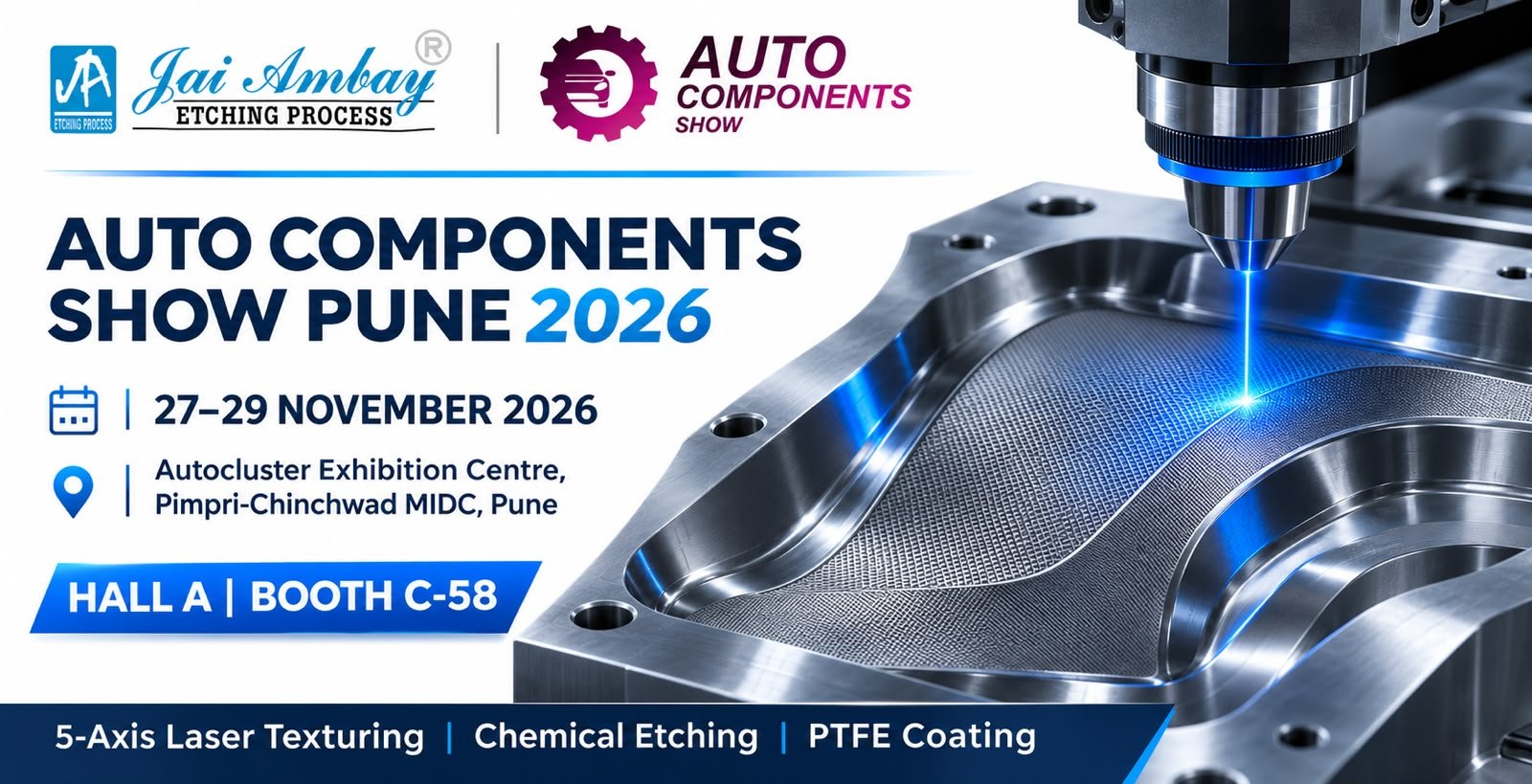



Laser Marking : What to Check Before Choosing a Service
Choosing the right laser marking service provider is important when you need clear, accurate, and permanent marks on your moulds. A good marking service helps you add logos, serial numbers, part numbers, and other details without affecting the required mould finish.
However, not every service provider offers the same quality. The machine, operator experience, mould condition, and marking requirements all affect the final result.
Before choosing a laser marking service, you should check whether the provider understands your mould and can deliver the required marking quality.
This guide explains how laser marking works, its benefits, common mistakes, and the important things to check before selecting a service provider.
What Is Laser Marking?
Laser marking is a process that uses a controlled laser beam to create permanent marks on a surface.
For moulds, manufacturers commonly use this process to add:
- Company logos
- Serial numbers
- Part numbers
- QR codes
- Identification marks
- Production details
- Custom designs
The laser follows a digital design and marks only the selected area.
Unlike printed labels, laser marks become part of the surface and do not need ink or stickers.
The result depends on the marking method, mould surface, and machine settings.
Why Is Laser Marking Important for Moulds?
Mould manufacturers need clear identification to manage tools, track production, and avoid confusion.
When several moulds look similar, permanent marking makes identification easier.
Professional laser marking offers several benefits.
Permanent Identification
Laser marks can remain readable for a long time when the marking depth and process suit the mould’s working conditions.
High Accuracy
A controlled laser can create small letters, numbers, and detailed designs.
Clean Marking
Laser marking does not require printing ink or adhesive labels.
Better Tool Identification
Serial numbers and part numbers help manufacturers identify moulds during production, inspection, and maintenance.
Repeatable Results
A digital design helps repeat the same marking on multiple moulds.
These benefits make laser marking useful for mould manufacturers that need clear and consistent identification.
How Does the Laser Marking Process Work?
The process follows a few important steps.
1. Mould Inspection
The service provider checks the mould surface and identifies the area that needs marking.
Scratches, old marks, uneven areas, and surface coatings may affect the result.
2. Digital Design Preparation
The required logo, number, text, or QR code is prepared in a digital file.
The team checks the size, position, and layout before starting.
3. Machine Setup
The operator selects suitable laser settings according to the mould surface and marking requirement.
4. Laser Marking
The laser follows the digital design and creates the required mark.
The process may change the surface colour or remove a small amount of metal, depending on the marking method.
5. Final Inspection
After marking, the team checks the position, clarity, size, and readability.
For QR codes or small numbers, checking readability is especially important.
What to Check Before Choosing a Laser Marking Service Provider

Choosing a reliable laser marking service requires more than comparing prices.
Here are the most important factors to consider.
1. Experience in Mould Marking
Choose a provider with practical experience in marking moulds.
Mould surfaces can have curves, deep areas, polished sections, and limited marking space.
An experienced team understands how to select a suitable marking position without affecting important mould areas.
Ask whether the provider has handled similar mould marking projects before.
2. Laser Marking Machine Quality
The machine plays an important role in marking accuracy.
A suitable machine should create clear letters, numbers, logos, and detailed marks.
However, an advanced machine alone does not guarantee good results.
Correct settings and operator experience are equally important.
3. Marking Accuracy and Clarity
Before selecting a provider, check the quality of previous marking work.
Look for:
- Clear letters
- Readable numbers
- Correct logo shape
- Consistent marking depth
- Proper alignment
- Clean edges
A mark should remain easy to identify without unnecessary damage to the surrounding mould surface.
4. Ability to Handle Different Mould Shapes
Not every mould has a simple flat surface.
Some moulds have curved areas, side walls, pockets, and difficult marking locations.
Ask whether the service provider can access the required area and position the mould correctly.
This is especially important when marking must be completed near a cavity or another sensitive area.
5. Correct Marking Depth
Not every marking job needs the same depth.
Some moulds need light surface marking, while others require deeper identification.
The provider should understand your requirement before selecting the laser settings.
Very deep marking in the wrong location may affect the mould surface.
6. Surface Preparation
A clean surface helps produce a better mark.
Before laser marking, the team should check for oil, dirt, rust, old markings, and uneven areas.
If required, the mould may need cleaning or polishing.
The correct preparation depends on the surface condition and marking design.
7. Quality Inspection
A professional service provider should inspect the marking after completion.
The team should check whether the mark matches the approved design and remains readable.
For QR codes, a scanning test can help confirm that the code works correctly.
8. Delivery Time and Communication
Choose a provider who clearly explains the work, required details, and expected delivery time.
Good communication helps avoid mistakes in serial numbers, logo placement, and marking size.
Laser Marking vs Laser Engraving: What Is the Difference?
Many manufacturers use these terms together, but they are not always the same.
Laser marking creates identification or surface marks. Depending on the method, it may change the surface appearance or remove a small amount of metal.
Laser engraving removes material to create a deeper design.
| Laser Marking | Laser Engraving |
| Used for identification and surface marks | Used for deeper designs and details |
| Can create light or shallow marks | Usually removes more material |
| Suitable for logos, numbers, and QR codes | Suitable for deep lettering and relief designs |
| Marking depth depends on the process | Depth is an important part of the design |
The right method depends on the mould and required result.
Common Laser Marking Mistakes to Avoid
Even a small mistake can affect the final marking quality.
Incorrect Marking Position
A logo or number placed in the wrong area may interfere with the mould’s required surface.
Solution: Confirm the marking location before starting.
Unclear Letters or Numbers
Incorrect settings or poor surface preparation can make small details difficult to read.
Solution: Check the design size and use suitable laser settings.
Wrong Marking Depth
A mark that is too shallow may become difficult to identify over time. Excessive depth may damage an important mould area.
Solution: Confirm the required depth before marking.
Poor Surface Preparation
Oil, rust, or old markings may affect the final result.
Solution: Inspect and prepare the surface properly.
Incorrect Digital Design
Wrong serial numbers, spelling mistakes, or incorrect logo files can cause costly rework.
Solution: Approve the final digital design before marking.
Applications of Laser Marking on Moulds
Laser marking supports different identification needs in mould manufacturing.
Common applications include:
- Injection mould identification
- Plastic mould identification
- Automotive mould marking
- Appliance mould marking
- Packaging mould marking
- Serial number marking
- Part number marking
- Company logo marking
- QR code marking
- Tool identification
Each application may require a different marking size, position, or depth.
A professional service provider should review these details before starting.
What Details Should You Share With a Laser Marking Service Provider?
Providing the right information helps the service provider understand your project.
Before sending your mould, share:
- Mould photographs: Show the area that needs marking.
- Mould dimensions: Mention the size and weight.
- Marking design: Share the logo, text, number, or QR code.
- Marking location: Clearly identify the required position.
- Marking size: Mention the required length and width.
- Marking depth: Explain whether you need light or deep marking.
- Delivery requirement: Share your expected completion date.
These details help reduce mistakes and make quotation preparation easier.
How Much Does Laser Marking Cost?
The cost of a laser marking service depends on the actual work.
Important factors include:
- Mould size and weight
- Marking area
- Design complexity
- Number of marks
- Required marking depth
- Surface condition
- Machine setup time
- Quantity of moulds
A simple serial number usually requires less work than a detailed logo or complex design.
For an accurate quotation, share the mould details and marking design with the service provider.
Why Choose Jai Ambay Etching Process for Laser Marking?
Jai Ambay Etching Process has over 30 years of hands-on experience in mould texturing and surface finishing.
Based in the Bawana Industrial Area, New Delhi, we provide professional mould-related services, including:
- Laser marking
- 3D laser engraving
- 5-axis laser texturing
- Chemical etching
- Mould polishing
- Mould surface finishing
Our team reviews the mould surface, marking design, location, and required result before starting the work.
We understand that accurate marking is important for mould identification, maintenance, and production records.
Our focus is to provide clear, consistent, and properly placed markings according to each mould’s requirements.
Final Checklist Before Selecting a Laser Marking Provider
Before confirming the service, make sure you have checked these points:
- Does the provider have mould marking experience?
- Can the machine handle your mould size?
- Is the marking location accessible?
- Have you approved the design?
- Is the required marking depth clear?
- Will the provider inspect the final result?
- Have you confirmed the quotation and delivery time?
These simple checks can help you avoid mistakes and unnecessary rework.
Conclusion
Choosing the right laser marking service provider is important for accurate and permanent mould identification.
The best results depend on machine quality, operator experience, correct marking depth, surface preparation, and final inspection.
Do not choose a provider based only on price. Check whether they understand your mould and can deliver the required marking quality.
If you need a professional laser marking service for your mould, contact Jai Ambay Etching Process. Our team can review your marking requirements and recommend a suitable solution.
Frequently Asked Questions
1. What is laser marking used for on moulds?
Laser marking creates permanent logos, serial numbers, part numbers, QR codes, and identification marks on mould surfaces.
2. Is laser marking permanent?
Laser marking can create long-lasting marks. Durability depends on marking depth, surface condition, and mould use.
3. Can laser marking work on curved mould surfaces?
Yes, if the machine can access the marking area and maintain the required working position.
4. Does laser marking damage the mould?
Proper laser marking uses controlled settings. Incorrect depth or placement can affect the mould surface.
5. What is the difference between laser marking and engraving?
Laser marking creates identification or surface marks, while laser engraving usually removes more material to create deeper designs.
6. How do I choose a laser marking service provider?
Choose a provider with mould marking experience, suitable equipment, clear quality checks, and proper process guidance.
Add a stronger service-focused introductionReduce repetitive explanations and headings
