

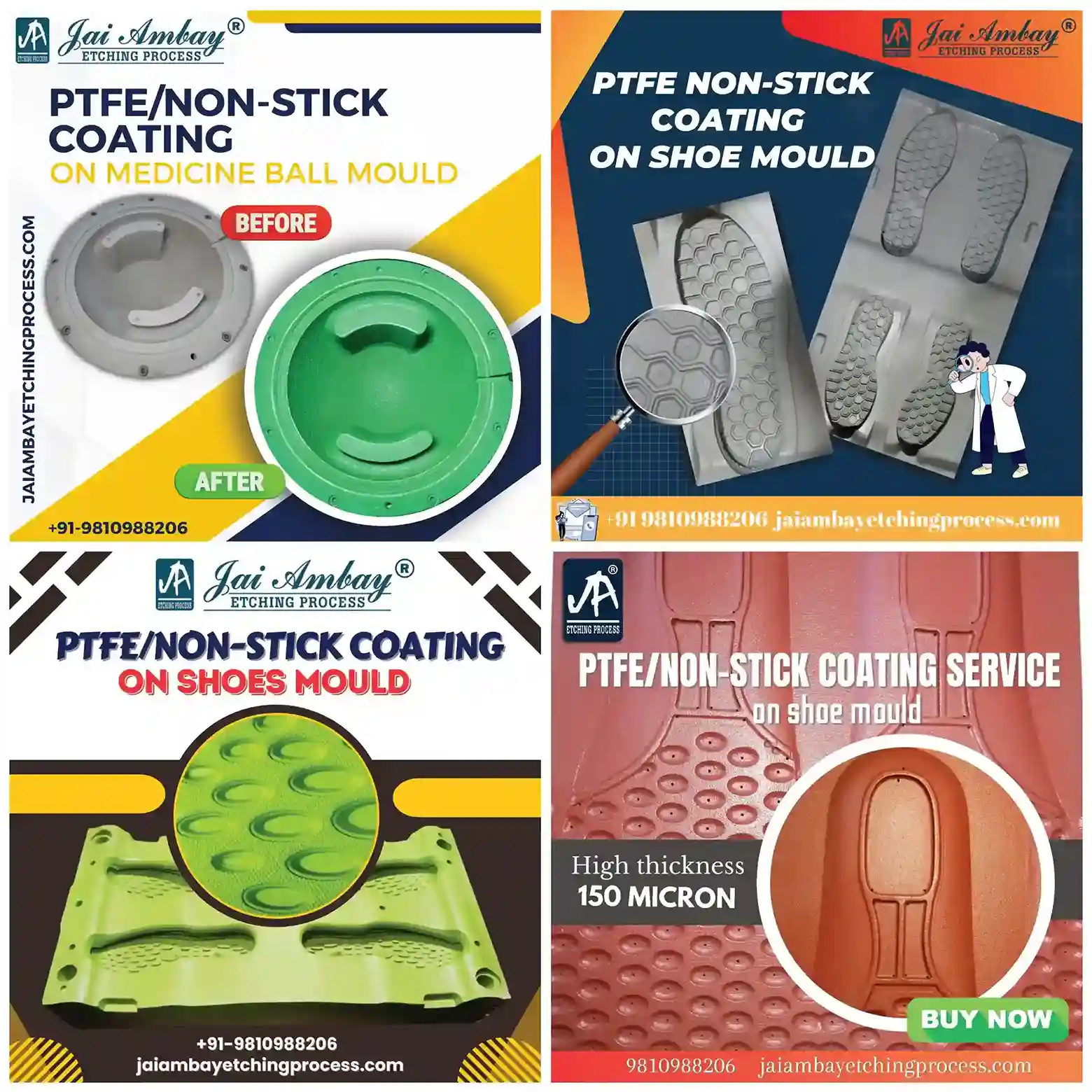
Ptfe Non Stick Coating in Pune
A mould should release the finished part smoothly. When material starts sticking to the mould surface, production can become difficult. Operators may need more time to remove parts, clean the mould, or prepare it for the next production cycle.
Ptfe coating in Pune can help to improve the non stick properties of suitable mould surfaces. Ptfe is known for its low-friction and non-stick characteristics. When the right coating system is correctly applied to a mould, it can support easier release and reduce unwanted sticking.
Which Manufacturers looking for ptfe non stick coating in pune, the goal should not simply be “getting a coating.” The main goal is selecting a surface treatment that suits the mould, its working conditions, and the production requirement.
This guide explains Ptfe coating to moulds. How the coating works, benefits, how the process is carried out, and how it differs from mould texturing.
What Is Ptfe Coating?
Ptfe stands for polytetrafluoroethylene. It is a fluoropolymer known for its low coefficient of friction and non stick properties. In simple words, Ptfe can create a surface that makes it harder for material to stick.
For a mould, this can be useful when the moulded part does not release easily from the cavity or other working surface.
Ptfe coating in Pune should be selected according to the actual mould application. Different moulds may work at different temperatures, pressures, production speeds, and release conditions. Because of this, the same coating process should not automatically be used for every mould.
A proper mould inspection should come first.
Why Use Ptfe Coating in Pune for Moulds?
A mould works repeatedly during production. Each cycle requires the moulded component to form correctly and then release from the surface.
When sticking becomes a regular problem, it can affect the production process.
A suitable Ptfe coating in Pune may help by creating a lower-friction, non-stick surface on the required mould areas.
The coating can be considered when the goal is to:
- Support easier mould release
- Reduce unwanted sticking
- Limit material build-up on suitable surfaces
- Make routine mould cleaning easier
- Create a lower-friction mould surface
- Support a smoother production process
Ptfe should not be treated as a solution for every moulding problem.
Poor release can also result from mould design, surface damage, contamination, incorrect processing conditions, or other production issues. A coating specialist should understand the problem before recommending Ptfe treatment.
Main Benefits of Ptfe Non Stick Coating in Pune
Choosing ptfe non stick coating in pune can offer useful surface benefits when it is correctly matched with the mould application.
1. Easier Release From the Mould
Easy release is one of the main reasons for applying ptfe coating to mould surfaces.
A moulded part may sometimes grip or stick to the cavity. A Ptfe coating surface has low-friction and non stick properties, which can support easier separation between the mould and the finished component.
This may help operators handle the release process more easily.
2. Reduced Surface Sticking
Repeated sticking can create unnecessary production problems.
A properly selected non stick coating in pune can help create a release friendly mould surface. This may reduce the tendency of processed material to remain attached to areas where sticking is a surface related issue.
The exact result will depend on the mould, coating system, process conditions, and material being moulded.
3. Easier Mould Cleaning
Moulds need regular cleaning to maintain the required working surface.
When residue strongly sticks to a cavity, cleaning may require extra effort. A non-stick surface may make some deposits easier to remove.
This is another practical reason manufacturers consider Ptfe coating in Pune for mould maintenance and production requirements.
4. Low-Friction Surface
Low friction is one of the recognised characteristics of Ptfe.
On an appropriate mould surface, lower friction may support smoother movement during part release. It can be particularly useful where unwanted drag between the mould and moulded component creates difficulty.
5. Better Surface Function
A mould surface is not only about appearance. It performs an important function during every production cycle.
A well-selected Ptfe non stick coating in Pune changes the working characteristics of the selected mould surface. The purpose is to create a functional surface that supports the required release behaviour.
Good results depend heavily on correct surface preparation and proper coating application.
When Does a Mould Need Ptfe Coating?
Not every mould needs Ptfe coating.
You may consider Ptfe coating in Pune when you regularly notice problems such as:
- Parts sticking during release
- Material remaining on the mould surface
- Frequent cleaning because of build-up
- High resistance during part release
- A need for improved non-stick surface properties
However, the mould should be checked before coating.
For example, if sticking occurs because the cavity is damaged or the production settings are incorrect, coating alone may not solve the issue.
The best approach is to identify why the problem occurs and then decide whether Ptfe is the right surface treatment.
How Ptfe Coating Is Applied to a Mould
The quality of a non stick coating in pune depends on more than the coating itself. Mould inspection, cleaning, surface preparation, application, and final checking are all important.
The exact process varies according to the coating system and mould, but a typical workflow includes the following steps.
Step 1: Mould Inspection
The mould is inspected before coating work begins.
The coating team check the surface condition, required coating area, mould geometry, existing surface treatment, and production requirement.
The purpose of the coating should also be clear.
Is the main issue sticking? Difficult release? Frequent residue? A clear answer helps guide the process.
Step 2: Surface Cleaning and Preparation
A coating needs a properly prepared surface.
Oil, dirt, old deposits, and contamination can affect the coating process. The mould surface therefore needs suitable preparation before applying Ptfe non stick coating.
Preparation should be carried out according to the mould and selected coating system rather than using one standard method for every job.
Step 3: Ptfe Coating Application
After preparation, the selected coating is applied to the required mould surface.
Some commercial Ptfe coating systems use spray application, although the exact method and coating system can vary. Pune service listings also show spray-applied Ptfe coating as one available industrial process.
Good application control is important because the coating should cover the required surface correctly and consistently.
Step 4: Controlled Curing
The coating system may require controlled heating or curing after application.
The correct process depends on the specific Ptfe coating system. A professional service provider should follow the technical requirements of that coating rather than assuming that every Ptfe product needs exactly the same conditions.
Step 5: Final Surface Inspection
After coating and curing, the mould be checked again.
The final inspection helps confirm that the required area has been treated and that the surface is suitable for its intended use.
Why Surface Preparation Matters for Ptfe Coating in Pune
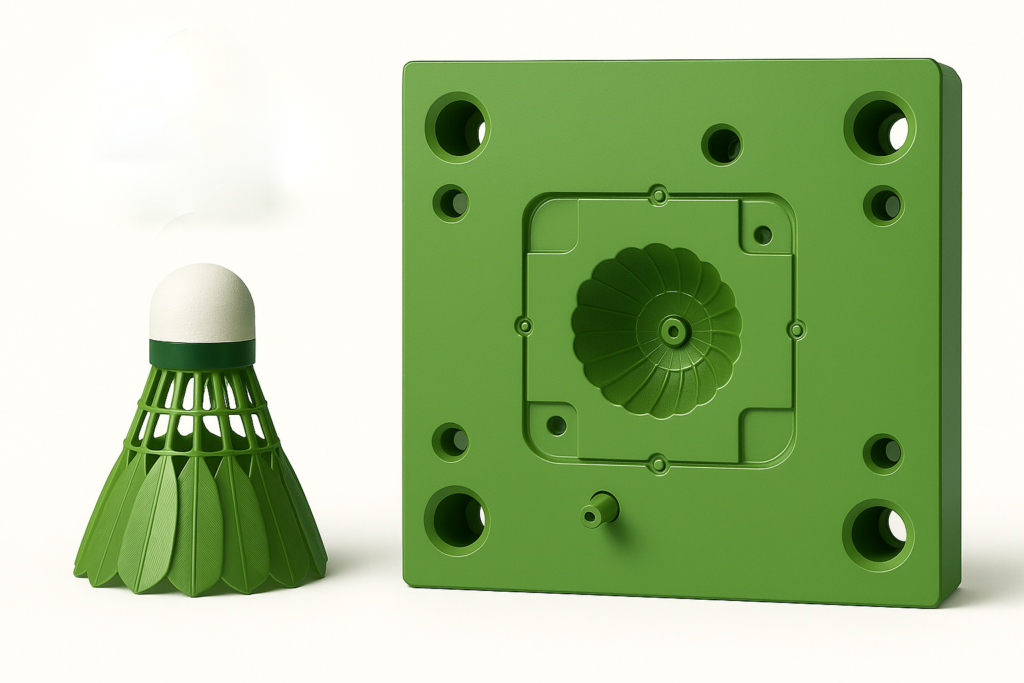
Surface preparation is one of the most important parts of Ptfe non stick coating.
Even a good coating system cannot perform correctly if the mould surface is not suitably prepared.
A mould may have:
- Production residue
- Oil or grease
- Previous surface deposits
- Old treatment
- Dirt or contamination
- Surface damage
These factors should be identified before coating.
The preparation method should suit both the mould and the final coating requirement.
Customers should therefore avoid choosing a provider only because of a low coating price. Correct mould handling and surface preparation can be just as important as the coating material itself.
Ptfe Coating and Mould Texturing : What Is the Difference?
Customers sometimes looking for mould texturing in pune while also exploring mould coating services. Both processes work on mould surfaces, but their purposes are different.
Ptfe Coating
Ptfe coating is mainly a functional surface treatment. Its purpose may include creating non-stick characteristics, reducing surface friction, and supporting easier mould release.
Mould Texturing
Mould texturing in Pune creates a planned surface texture on the mould.
The texture can help produce the required appearance or surface pattern on a moulded component. It changes the physical texture of the mould surface rather than simply adding non-stick properties.
Here is an easy comparison:
| Surface Service | Main Purpose |
| Ptfe coating | Improve non stick and low friction characteristics |
| Non stick coating | Support easier release from the mould |
| Mould texturing | Create a required texture or surface pattern |
| Mould surface treatment | Modify the surface for a specific production need |
A mould may require Ptfe coating, texturing, or another suitable surface process depending on the final requirement.
Therefore, when requesting mould texturing in pune, explain the required texture or appearance clearly. When requesting Ptfe coating, explain the sticking, release, or surface problem.
How to Choose a Ptfe Coating Service
When comparing providers of Ptfe coating in pune, focus on their ability to understand moulds.
A mould can be an important production asset. It requires careful handling.
Before placing an order, ask the coating provider:
- Do you regularly work specifically on moulds?
- Will you inspect our mould before recommending the coating?
- What surface preparation will you use?
- Which areas of the mould should receive the coating?
- Which Ptfe system suits our operating conditions?
- What information do you need about our moulding process?
- Are there any limitations we should understand?
- How will you inspect the mould after coating?
A good discussion before the job starts helps both the customer and service provider understand the required result.
Why Choose Jai Ambay Etching Process for PTFE Coating in Pune?
Many companies provide general coating services, but moulds need a more application-focused approach. The cavity condition, surface finish, mould design, coating area, and release requirement should all be considered before choosing a treatment.
Jai Ambay Etching Process brings 30+ years of experience in mould texturing and surface engineering. For manufacturers looking for non stick coating in Pune, our mould-focused approach helps us understand the surface and release problem before recommending a suitable treatment.
Instead of simply asking, “Which coating do you provide?”, we focus on a more important question: “What treatment is suitable for this mould and its release problem?”
This approach keeps the focus on the mould, its production needs, and the required surface performance.
Conclusion
A mould surface plays an important role in part release and production performance. If repeated sticking, difficult release, or unwanted build-up is connected with the mould surface, Ptfe coating in pune may provide a useful solution.
Ptfe offers recognised low-friction and non-stick characteristics, but successful coating work depends on more than the material itself. The mould must be inspected, properly prepared, coated with a suitable system, processed correctly, and checked after completion.
If your main requirement is easier mould release, consider ptfe non stick coating in pune after a proper mould assessment. If your requirement is a specific surface pattern or appearance, mould texturing in pune may be more suitable.
The right approach is simple: understand the mould problem first, then choose the correct surface treatment.
Frequently Asked Questions
What is Ptfe coating in Pune for moulds?
Ptfe coating in Pune is a surface coating service that applies a Ptfe-based system to suitable mould surfaces. It is generally used when low friction, non-stick behaviour, easier mould release, or simpler cleaning is required.
Is Ptfe coating suitable for every mould?
No. The suitability of Ptfe depends on the mould, surface condition, operating environment, production process, and required result. The mould should be inspected before choosing the coating.
What are the main benefits of Ptfe non stick coating in Pune?
The main potential benefits include improved non-stick behaviour, lower surface friction, easier mould release, reduced sticking in suitable applications, and easier cleaning.
Can Ptfe coating completely stop mould sticking?
Not always. Ptfe coating in Pune may help when the sticking problem is related to surface interaction. If the problem comes from mould damage, design, contamination, or incorrect production settings, other corrective work may also be required.
Is non stick coating in Pune the same as Ptfe coating?
Ptfe is one type of coating known for non-stick and low-friction properties. When requesting non stick coating in Pune, tell the service provider that the application is a mould so the correct coating system can be considered.
Is mould texturing in Pune the same as Ptfe coating?
No. Mould texturing in Pune creates a planned surface texture or pattern. Ptfe coating mainly changes functional surface properties such as friction and non-stick behaviour.
Should the mould be cleaned before Ptfe coating?
Yes, proper surface preparation is important. The professional coating process normally includes suitable cleaning and preparation according to the mould and selected coating system.
What details are needed for a Ptfe coating quotation?
Share mould photos, dimensions, coating area, surface condition, working conditions, sticking or release issue, and any relevant drawings. These details make it easier to understand the job correctly.