

What Is Laser Texturing? Process, Benefits, and Industrial Uses
Table of Contents
What Is Laser Texturing?
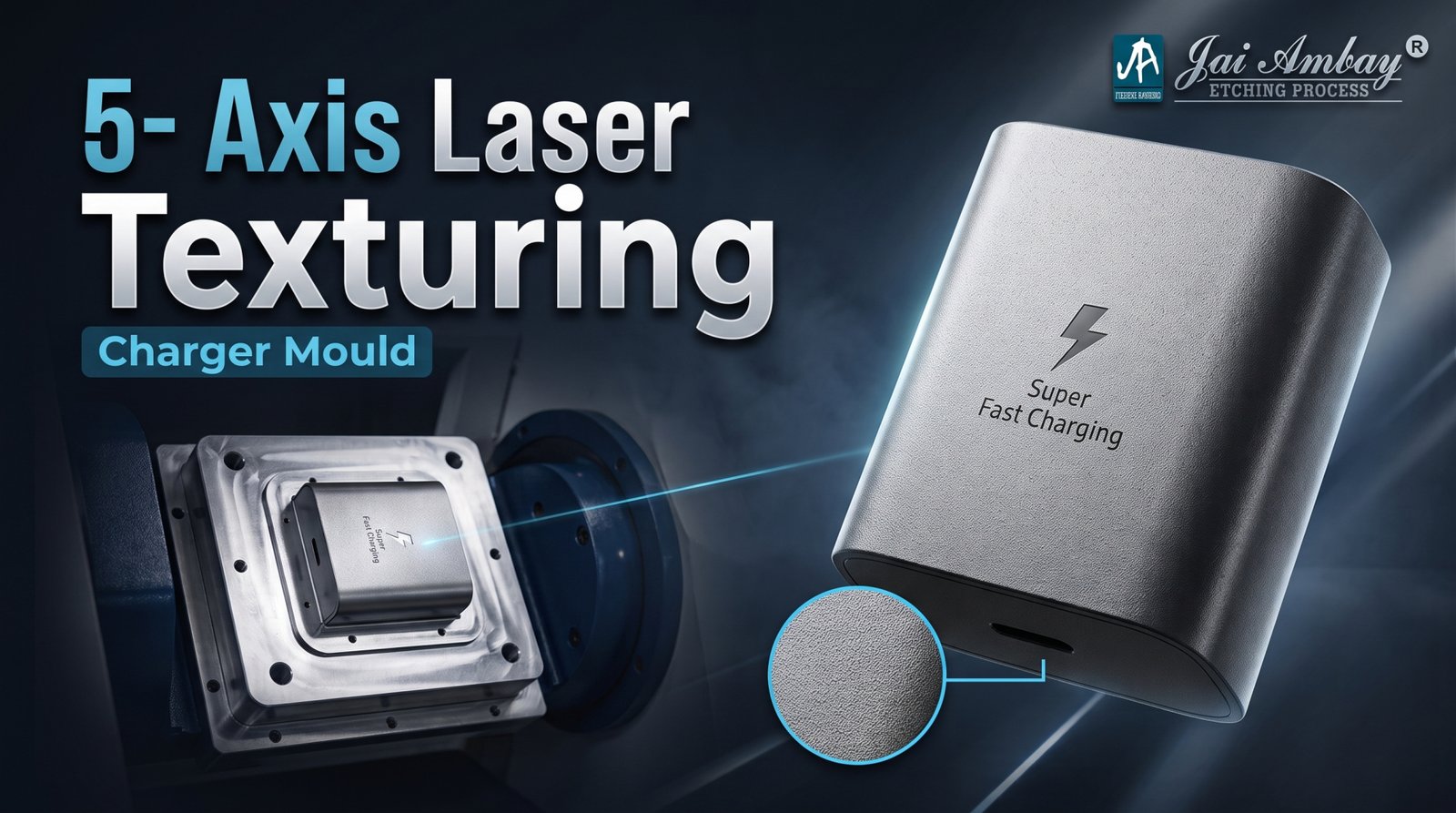
Laser texturing is a modern method used to create precise textures on mould surfaces without touching the material. It uses a high-powered laser beam to remove tiny amounts of material from the mould surface and produce the required pattern.
Today, manufacturers prefer laser texturing because it delivers high accuracy, consistent quality, and repeatable results. It has become an important technology for moulds, where surface finish directly affects the appearance and performance of plastic parts.
Unlike traditional chemical etching, laser texturing is clean, highly controlled, and environmentally friendly. It also allows manufacturers to create complex designs that are difficult to achieve with older methods.
If you need premium textures for moulds, Jai Ambay Etching Process provides high-precision laser texturing services that deliver reliable, consistent, and efficient results for injection moulds and plastic moulds.
How the Laser Texturing Process Works
The laser texturing process begins with a digital texture design. This design is converted into machine instructions that guide the laser with extreme precision.
The typical process includes the following steps:
- Mould Inspection
- Engineers inspect the mould surface.
- They ensure it is clean and ready for texturing.
- Texture Design
- A digital texture pattern is selected or created.
- The design matches the customer’s product requirements.
- Laser Programming
- The design is uploaded into the laser system.
- Machine settings are adjusted based on the required texture depth and detail.
- Laser Surface Texturing
- The laser beam removes microscopic layers from the mould surface.
- The texture forms directly on the mould with excellent precision.
- Quality Inspection
- The finished texture is checked for accuracy.
- Engineers verify that the pattern meets the design specifications.
This digital workflow ensures every mould receives the same high-quality finish with minimal variation.
What Is a Laser Texturing Machine?
A laser texturing machine is advanced equipment that uses a computer-controlled laser beam to create precise and detailed surface textures on moulds. It allows manufacturers to produce consistent, high-quality textures with excellent accuracy and repeatability.
At Jai Ambay Etching Process, we use the Advanced GF Laser S 1200 U, a German technology-based 5-axis laser texturing system. This advanced machine enables us to create complex and highly accurate textures on injection moulds and plastic moulds, ensuring premium surface finishes and consistent results.
Modern laser texturing machines offer many advantages:
- High precision
- Excellent repeatability
- Fast production
- Minimal human error
- Clean processing
- No chemicals required
Because the process is fully digital, manufacturers can reproduce identical textures on multiple moulds, making it an ideal solution for high-volume production while maintaining consistent quality across every mould.
What Is Laser Surface Texturing?
Laser surface texturing is the process of creating controlled micro-patterns on the mould surface using laser technology.
Instead of polishing the mould into a smooth finish, manufacturers intentionally create a specific texture that transfers onto the plastic part during injection moulding.
Common texture goals include:
- Premium decorative finishes
- Matte appearances
- Fine grain patterns
- Leather-like textures
- Improved grip
- Better visual quality
Laser surface texturing provides exceptional control over every detail of the final mould finish.
Laser Mold Texturing for Injection Moulds
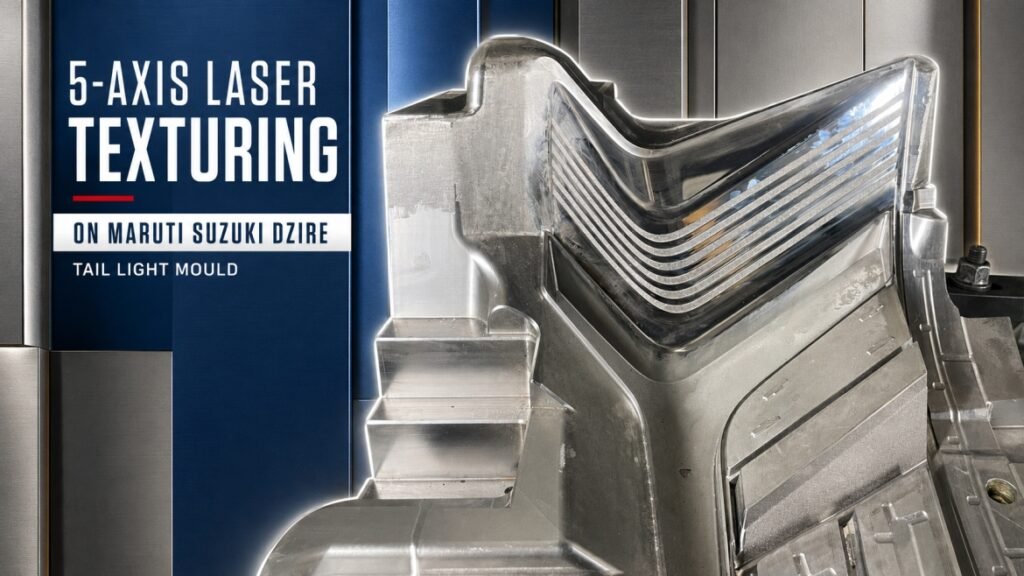
Laser mold texturing is widely used in the mould manufacturing industry because it improves both appearance and functionality.
When applied to injection moulds, laser texturing creates consistent surface finishes that transfer perfectly to plastic components.
Benefits for injection moulds include:
- Uniform texture across the entire mould
- High-quality cosmetic finish
- Better consistency between production batches
- Reduced polishing requirements
- Greater design flexibility
Manufacturers of plastic products rely on laser mold texturing to achieve attractive and repeatable surface finishes.
Laser Engraving Texture vs. Laser Texturing
Many people confuse laser engraving texture with laser texturing, but they serve different purposes.
Laser engraving usually creates visible markings, logos, or deep engraved designs.
Laser texturing focuses on creating controlled surface patterns that improve the appearance and feel of plastic parts produced from moulds.
In mould manufacturing, laser texturing is the preferred option because it produces highly detailed textures while maintaining dimensional accuracy.
Benefits of Laser Texturing
Laser texturing offers many advantages for mould manufacturers and plastic product manufacturers.
High Precision
Laser systems produce extremely fine textures with excellent accuracy.
Every detail matches the digital design.
Excellent Repeatability
Every mould receives the same texture.
This consistency is important for mass production.
Better Product Appearance
Textured moulds produce attractive plastic parts with premium finishes.
Customers often prefer products with high-quality surface textures.
Environmentally Friendly
Unlike chemical etching, laser texturing does not require harmful chemicals.
This makes the process cleaner and safer.
Lower Maintenance
Digital processing reduces manual work and minimizes processing errors.
It also helps maintain consistent production quality.
Design Freedom
Complex texture designs are easier to create with laser technology.
Manufacturers can develop unique surface finishes that enhance product value.
Industrial Uses of Laser Texturing
Laser texturing is widely used across industries that manufacture plastic products using injection moulds.
Some common applications include:
Automotive Plastic Parts
Manufacturers use textured moulds to create dashboard components, interior trims, control panels, and decorative plastic parts with premium finishes.
Consumer Products
Plastic housings, storage products, home appliances, and everyday consumer goods benefit from attractive textured surfaces.
Electronics
Plastic covers, control panels, and electronic device housings often require consistent textures that improve appearance and reduce visible fingerprints.
Packaging Products
Injection moulds used for plastic packaging can include fine textures that enhance product presentation.
Industrial Plastic Components
Many industrial plastic parts require durable and consistent surface finishes that laser texturing can provide.
GF Laser Texturing
GF Laser Texturing is a well-known laser texturing technology used by mould manufacturers around the world.
It is recognized for its high precision, advanced automation, and ability to create complex textures on mould surfaces.
Many manufacturers choose GF laser texturing because it offers:
- Accurate texture reproduction
- Reliable processing
- High-quality surface finishes
- Consistent production results
For precision injection mould manufacturing, GF laser texturing is considered one of the industry’s trusted technologies.
How Texture Laser Technology Improves Plastic Moulds
Modern texture laser technology allows manufacturers to create premium mould surfaces that directly improve plastic product quality.
The technology helps manufacturers achieve:
- Better visual appeal
- Uniform texture transfer
- Improved customer satisfaction
- Greater production consistency
- Reduced finishing work
Because the process is digitally controlled, even highly detailed textures remain consistent across every mould.
Why Manufacturers Choose Laser Texturing
Manufacturers continue to adopt laser texturing because it provides a combination of quality, efficiency, and flexibility.
Compared with traditional surface finishing methods, laser texturing offers:
- Faster production
- Higher accuracy
- Better repeatability
- Cleaner manufacturing
- More texture options
- Consistent mould quality
These advantages make laser texturing an excellent investment for companies producing high-quality plastic moulds.
Conclusion
Laser texturing has transformed the way manufacturers create premium surface finishes on moulds. Its digital workflow, high precision, and repeatable results make it one of the best technologies for injection moulds and plastic moulds.
Whether you need decorative textures, fine grain finishes, or consistent surface quality, the laser texturing process delivers outstanding results while reducing manual work and improving production efficiency.
As demand for high-quality plastic products continues to grow, technologies such as laser surface texturing, laser mold texturing, laser engraving texture, texture laser, and GF laser texturing will continue to play an important role in modern mould manufacturing. Choosing an experienced laser texturing service provider ensures your moulds achieve the precision, consistency, and premium finish needed for long-term production success.
Frequently Asked Questions
What is laser texturing?
Laser texturing is a precision process that creates controlled surface patterns on moulds using a focused laser beam. These textures transfer to plastic parts during injection moulding.
What is the laser texturing process?
The laser texturing process includes mould inspection, digital texture design, laser programming, laser surface texturing, and quality inspection.
What is a laser texturing machine?
A laser texturing machine is computer-controlled equipment that produces accurate and repeatable textures on mould surfaces using laser technology.
What is laser mold texturing?
Laser mold texturing is the application of laser-generated surface patterns on moulds to improve the appearance and functionality of plastic products.
Is laser surface texturing better than chemical etching?
Laser surface texturing offers greater precision, cleaner processing, better repeatability, and improved environmental performance because it does not require chemicals.