


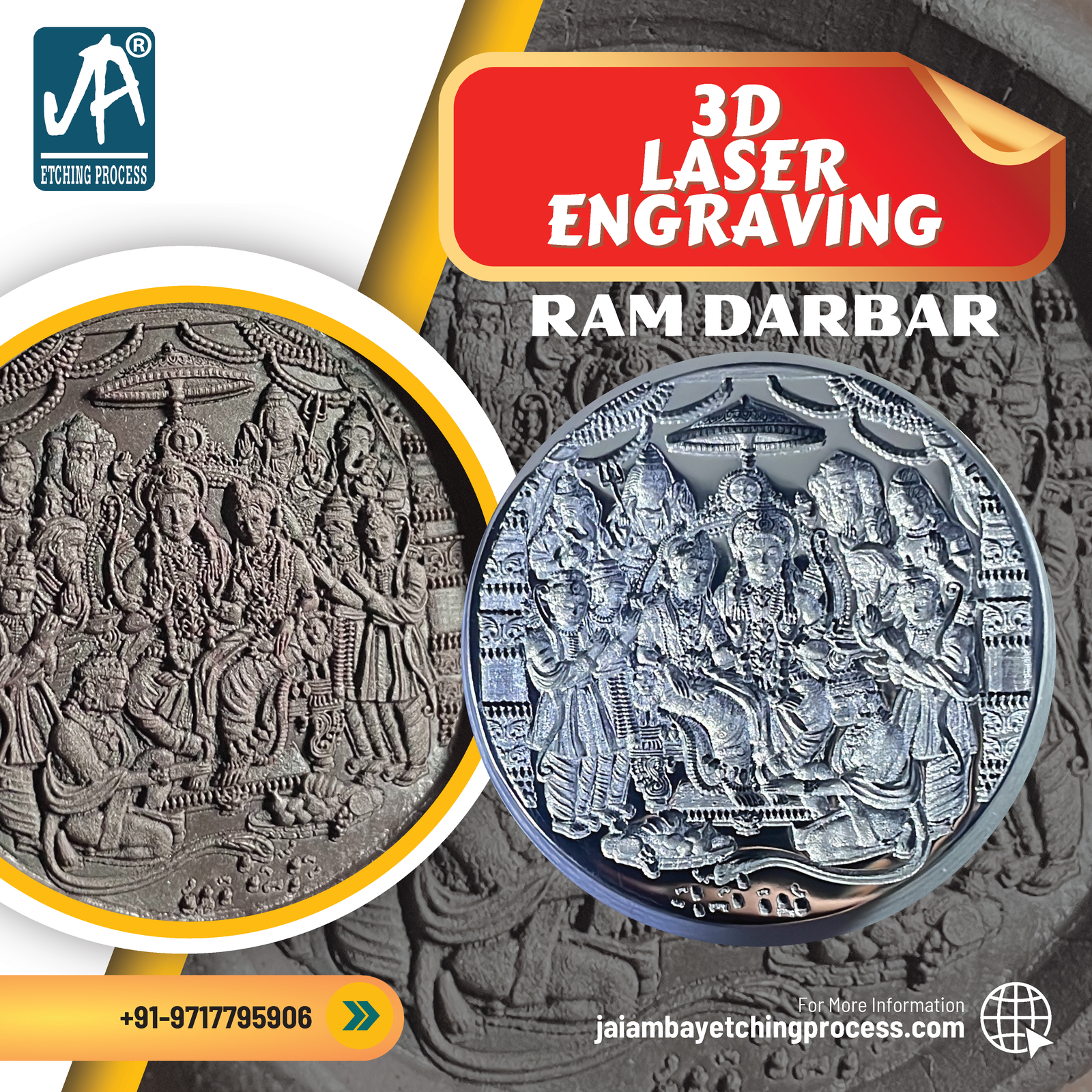
Laser Engraving Service in Pune for Moulds
Design & texture , or detailed mark on a mould may look simple. But creating it with clean edges and the right depth needs skill and control.
That is where laser engraving helps.
Jai Ambay Etching Process provides Laser Engraving Service in Pune for moulds. With 30+ years of experience in mould surface work, we understand how carefully a production mould needs to be handled.
Our laser engraving work is focused on creating clear and controlled designs on mould surfaces. Depending on the job, this can include logos, patterns, identification details, fine designs & texture, and custom engraving.
You do not need to know all the technical details before contacting us. Show us the mould and tell us what you want to create. If you have a drawing, image, design file, or sample, share it with our team. We can study the job and guide you on the next step.
Along with laser engraving, Jai Ambay Etching Process also provides mould texturing, chemical etching, 5 axis laser texturing, and PTFE non-stick coating services.
What Is Laser Engraving on a Mould?
Laser engraving uses a controlled laser beam to create a design, mark, pattern, or detail on the surface of a mould.
The laser works without a cutting tool touching the mould. Instead, the process removes or changes the surface in a controlled way to create the required engraving.
This gives better control when working on fine details.
Laser engraving on moulds can be used for requirements such as:
- Logos
- Names and letters
- Identification details
- Fine patterns
- Decorative designs
- Custom artwork
- Detailed surface features
- Selected design areas
The exact engraving method depends on the design, mould shape, depth, and final result you need.
The main goal is simple: create the required detail clearly and in the correct place on the mould.
Laser Engraving Service in Pune for Local Manufacturers
Pune is one of India’s major manufacturing and engineering centres. Companies across Pune and nearby industrial areas depend on moulds for daily production.
When a mould needs engraving or detailed surface work, sending it to a team that understands moulds can make the job easier.
Jai Ambay Etching Process offers Laser Engraving Service in Pune for manufacturers with different mould engraving needs.
Getting started is easy.
You can share:
- Your mould
- The area that needs engraving
- Logo or artwork
- Drawing or design file
- Reference image
- Required engraving depth
- Size and position of the design
Do not worry if you are unsure about the technical process. Tell us what you want the finished mould to look like.
Our team can check the mould and design before discussing the best way to do the work.
Why Use Laser Engraving for Moulds?
Traditional methods may work for some mould jobs, but detailed designs often need better control.
Laser engraving gives us a digital way to work on the mould surface.
This can help with:
- Fine design details
- Clear patterns
- Controlled engraving
- Sharp design edges
- Custom designs
- Repeatable patterns
- Complex surface work
Because the laser is digitally controlled, the design can be planned before engraving starts.
This is especially useful when a mould needs a logo, detailed pattern, or another design that must be placed carefully.
However, laser engraving is not the answer to every mould surface job.
Sometimes a customer actually needs texturing, chemical etching, or another process. We prefer to understand the final result first instead of suggesting laser engraving for every requirement.
How We Do Laser Engraving – Step by Step
Every mould is different, but we keep the laser engraving process simple and clear.
Step 1: Understand Your Design
First, we understand what you want to engrave on the mould.
You can share a drawing, pattern, design file, image, or sample. We also check where you want the engraving and how you want the final design to look.
Step 2: Check the Mould
Our engineering team checks the mould surface and the area where engraving is required.
We look at the mould shape, curves, corners, available space, and other details that may affect the engraving work.
Step 3: Prepare the Digital Design
Next, we prepare the design for laser engraving.
We check the size, position, pattern, and other important details before starting the actual laser work.
Step 4: Prepare the Mould Surface
The mould surface is cleaned and prepared before engraving.
A properly prepared surface helps us carry out the laser work with better control.
Step 5: Laser Engraving
The laser creates the required texture, pattern, text, or design on the selected mould area.
The process is digitally controlled, which helps us create fine details and clear designs without a cutting tool touching the mould.
Step 6: Final Quality Check
Once the engraving is complete, we check the finished area.
Our team reviews the design, position, details, and overall appearance before completing the job.
The exact process may change slightly depending on the mould shape, design, engraving depth, and project needs.
What Can Be Created With Laser Engraving?
Customers often ask what kind of designs can be engraved on moulds.
There is no single answer because every project is different.
Depending on the mould and design, laser engraving can be used for fine lines, patterns, logos, lettering, decorative details, and other custom surface work.
If you already have a design, share it with us.
If you only have a reference image, that can also be a useful starting point.
Our team can look at the design and mould together before discussing what can be done.
Laser Engraving vs 5 Axis Laser Texturing
Laser engraving and laser texturing are related, but they are not exactly the same thing.
Laser engraving is commonly used when a mould needs a defined design, logo, mark, pattern, or detailed engraved feature.
5 axis laser texturing focuses more on creating controlled textures across mould surfaces, including complex shapes and different angles.
Which process should you choose?
Think about the result you want.
If you need a logo or defined design, laser engraving may make sense. If you need a larger texture across a complex mould surface, 5 axis laser texturing may be a better option.
You do not need to decide before speaking with us. Show us the mould and required finish, and we can discuss the job with you.
Mould Texturing for Different Surface Finishes
A mould texture can completely change the look of a moulded part.
Some products need a fine grain. Others may need a deeper pattern or a more detailed decorative finish.
Jai Ambay Etching Process provides Mould Texturing in Pune for different mould surface needs.
Mould texturing is not simply about making the surface rough. The pattern needs to suit the design and cover the correct part of the mould.
Before starting, we look at:
- The texture you need
- Mould shape
- Area to be textured
- Existing mould surface
- Pattern details
- Final appearance
If you have a texture sample or reference image, share it with us. It can make it much easier to understand the finish you want.
Chemical Etching for Mould Textures
Laser technology is not the only way to create a texture on a mould.
Chemical etching has been used for mould texturing for many years and can still be a good choice for many texture designs.
In simple words, the required mould area is prepared and protected. A controlled chemical process then creates the texture on the selected surface.
Chemical etching needs experience because the pattern, protected areas, and etching process must be handled carefully.
So, which is better: chemical etching or laser texturing?
Neither method is automatically better for every job.
The choice depends on the mould, pattern, shape, level of detail, and final look you need.
PTFE Non Stick Coating for Mould Release Problems
Not every mould surface problem is related to design or texture.
Sometimes the problem is sticking.
If a moulded part does not release easily, production can become slower and the mould may need more frequent cleaning.
For suitable mould applications, PTFE non stick coating can help create a low-friction, non-stick surface.
It may help with:
- Easier mould release
- Less unwanted sticking
- Lower surface friction
- Easier mould cleaning
- Smoother mould operation
Before suggesting PTFE coating, we first try to understand why the mould is sticking.
This matters because different moulds can have different release problems. The right solution should start with the actual problem.
Frequently Asked Questions
What is laser engraving?
Laser engraving uses a controlled laser to create a design, logo, pattern, lettering, or other detail on a mould surface. It is a non-contact process and can be used for fine, controlled work.
Where can I get Laser Engraving Service in Pune?
Jai Ambay Etching Process provides Laser Engraving Service in Pune for moulds. You can share your mould and design with our team to discuss the job.
Can you engrave a logo on a mould?
Laser engraving can be used for logos and other detailed designs, depending on the mould, design, size, position, and required result.
Can laser engraving work on complex mould shapes?
The right method depends on the shape and engraving area. For more complex surfaces and texture work, 5 axis laser texturing may also be considered.
Do you provide mould texturing in Pune?
Yes. Jai Ambay Etching Process provides Mould Texturing in Pune along with laser engraving and other mould surface services.
Do you provide chemical etching?
Yes. We provide chemical etching for mould texturing requirements.
Do you provide PTFE non-stick coating?
Yes. We provide PTFE non stick coating for moulds where a non-stick, low-friction surface is needed.
How much experience does Jai Ambay Etching Process have?
Jai Ambay Etching Process has 30+ years of experience in mould surface work, including texturing and related processes.
